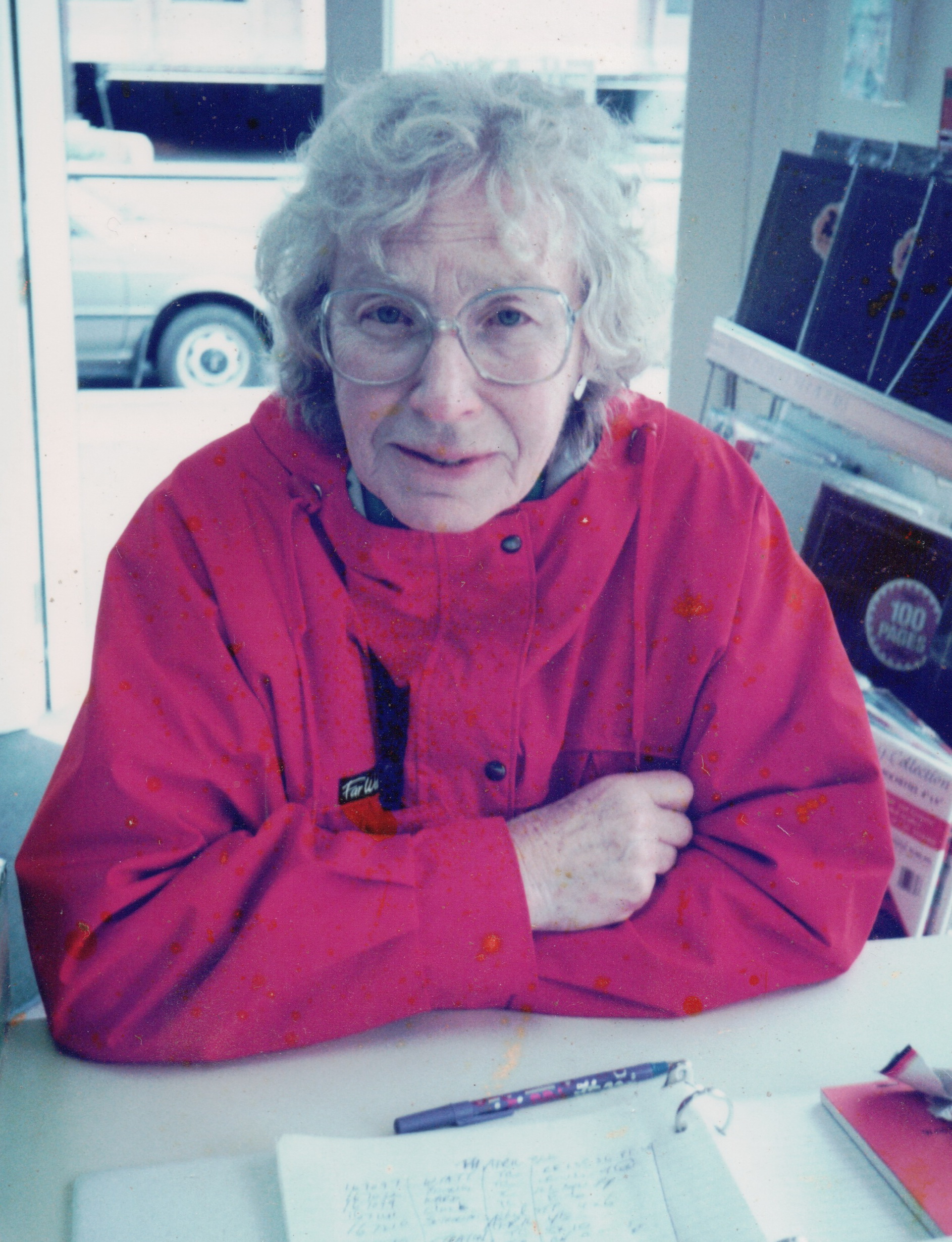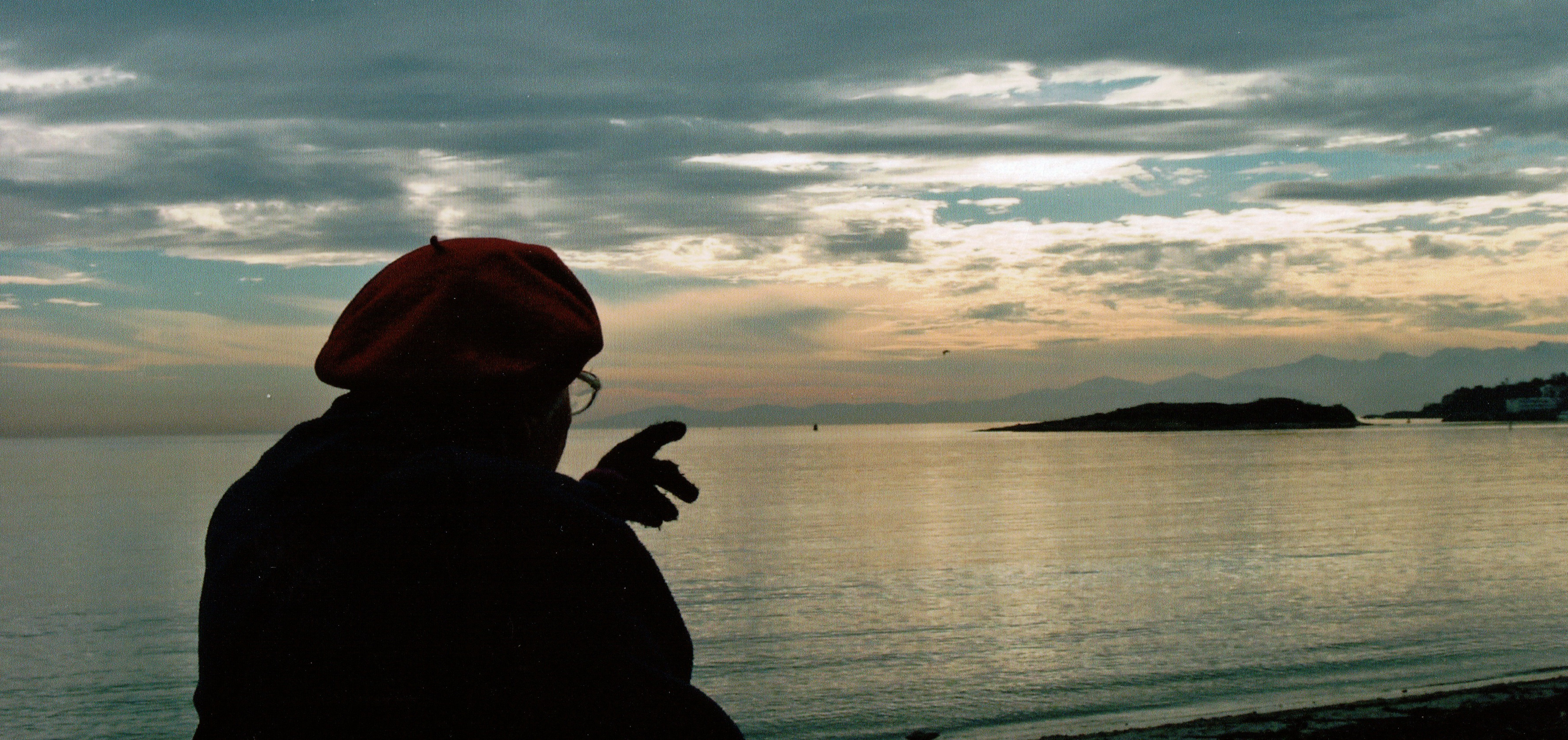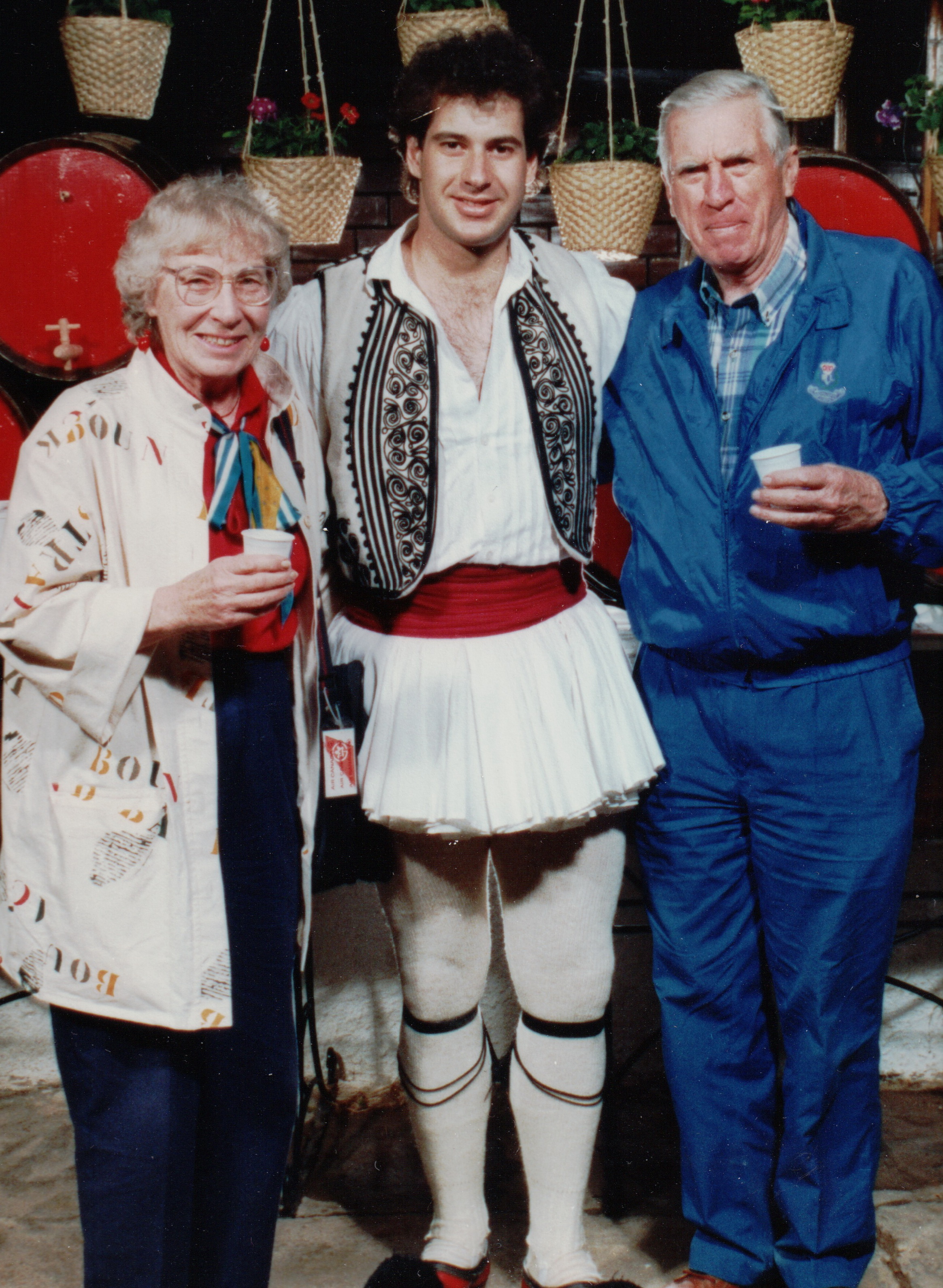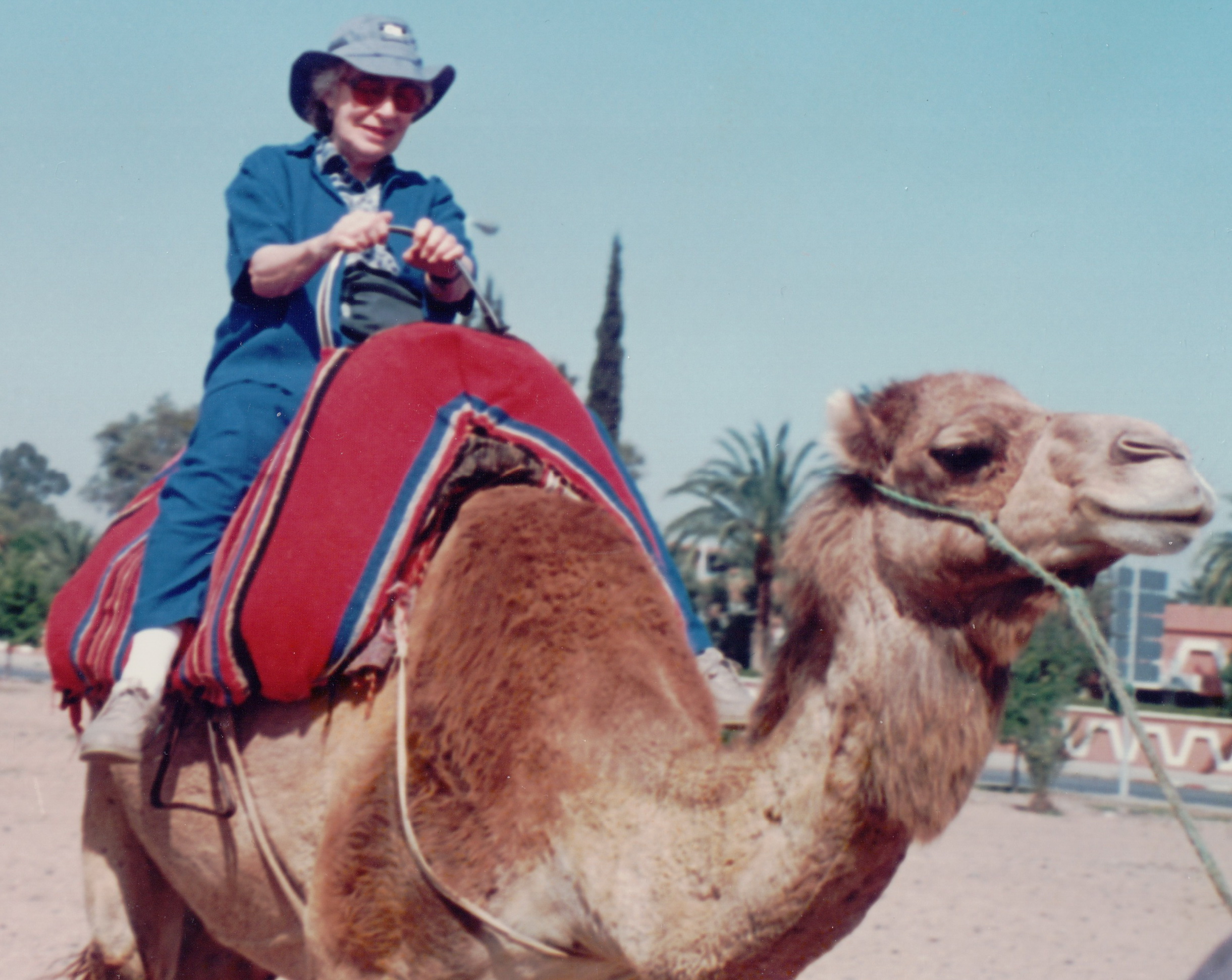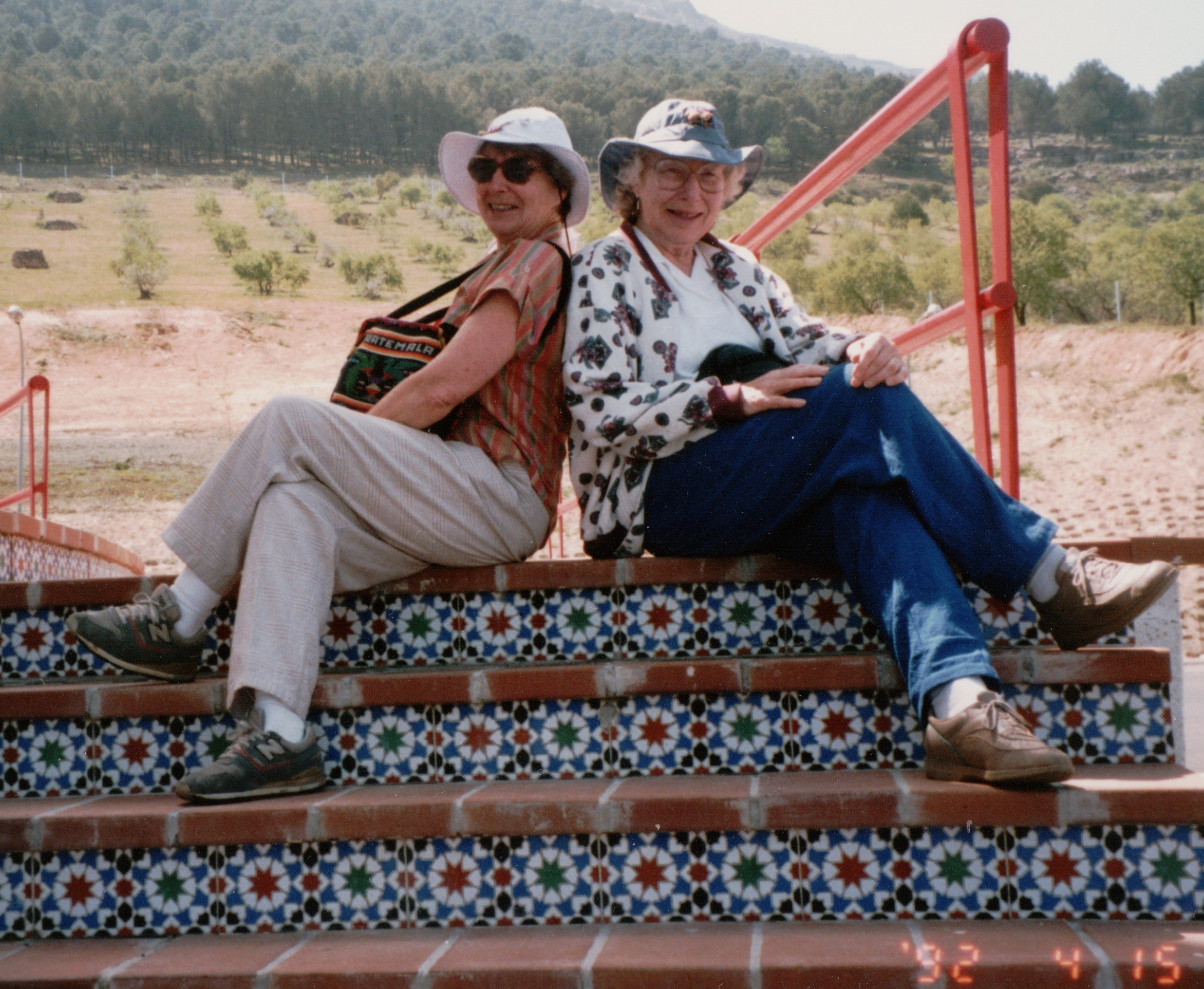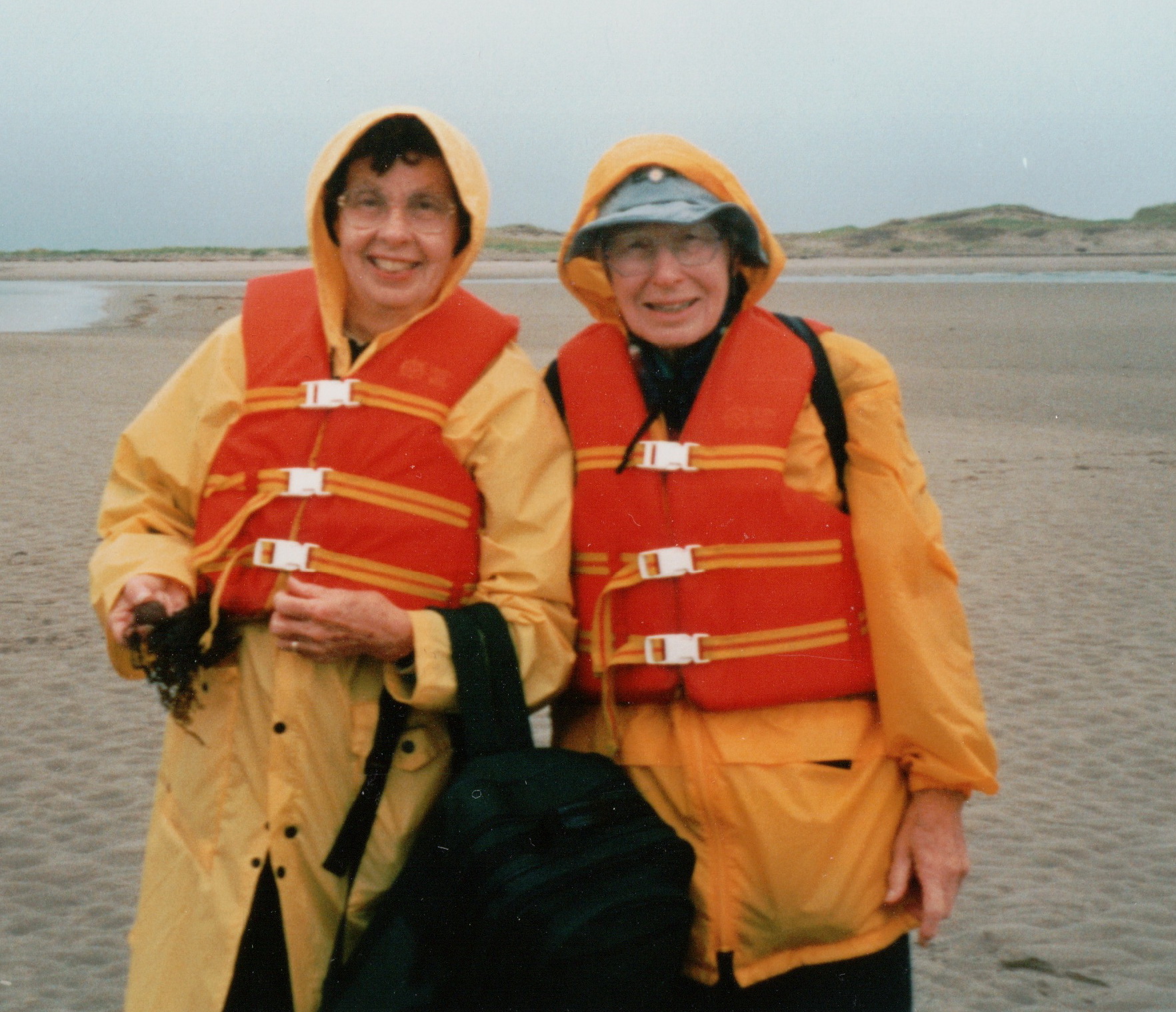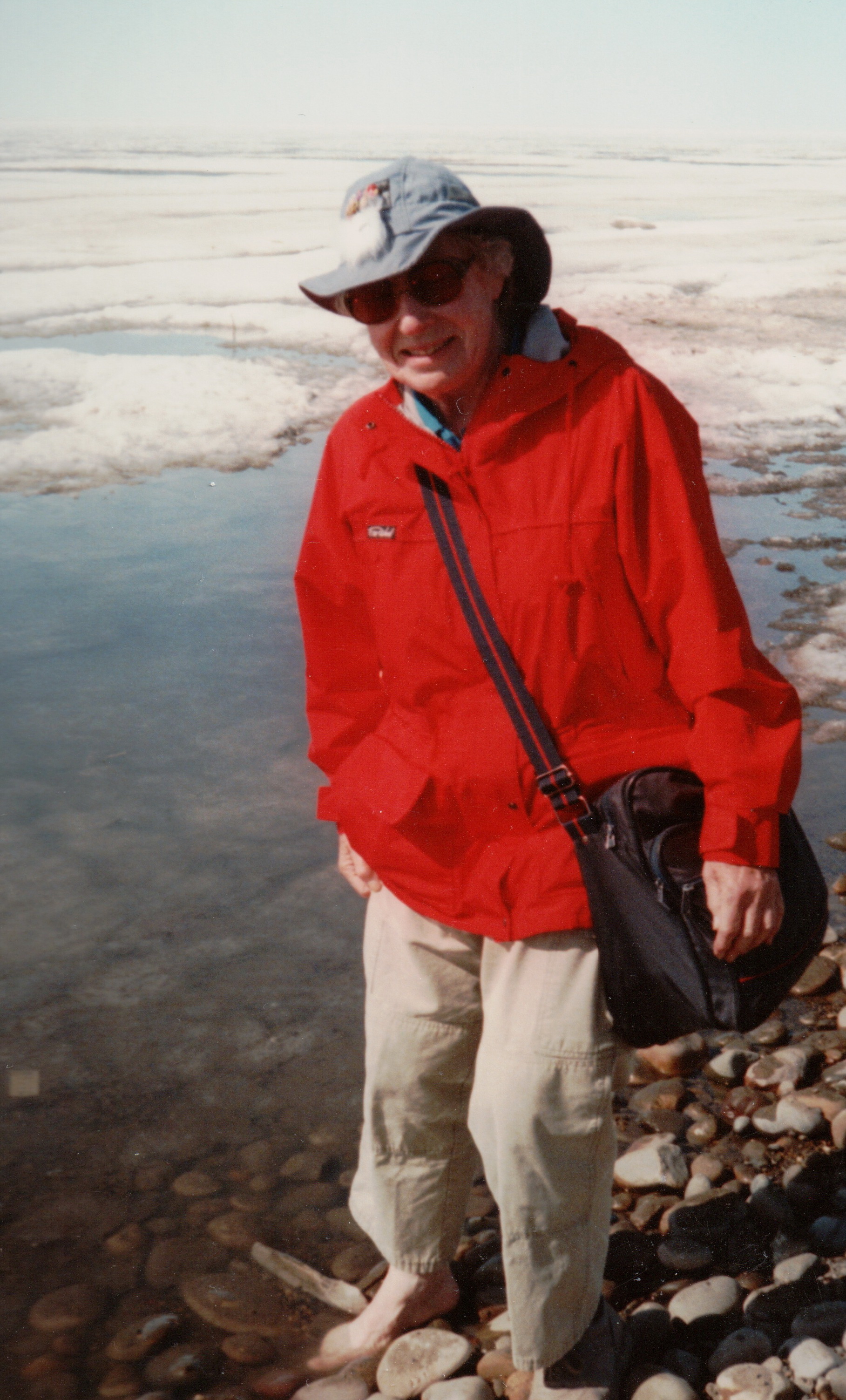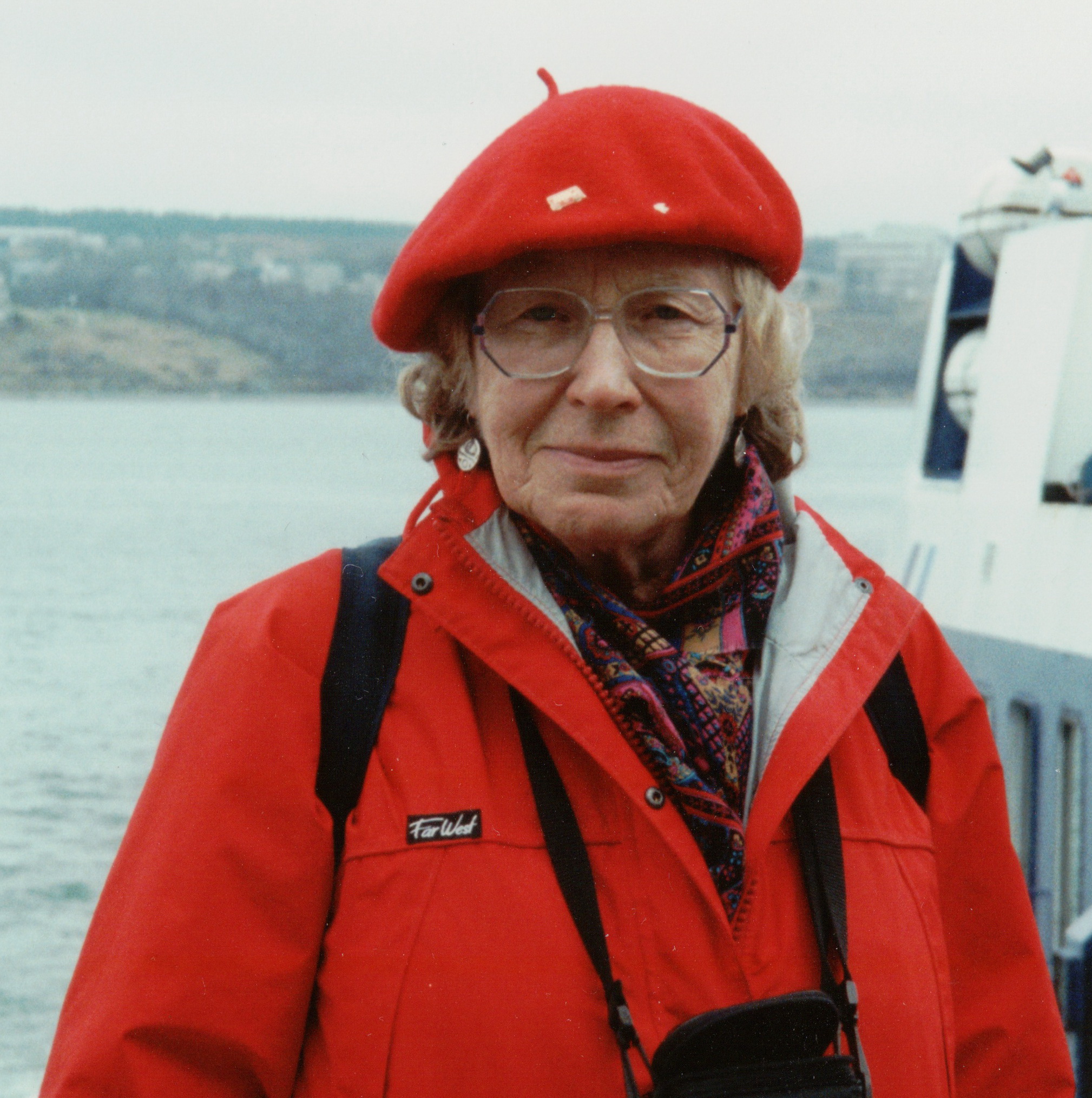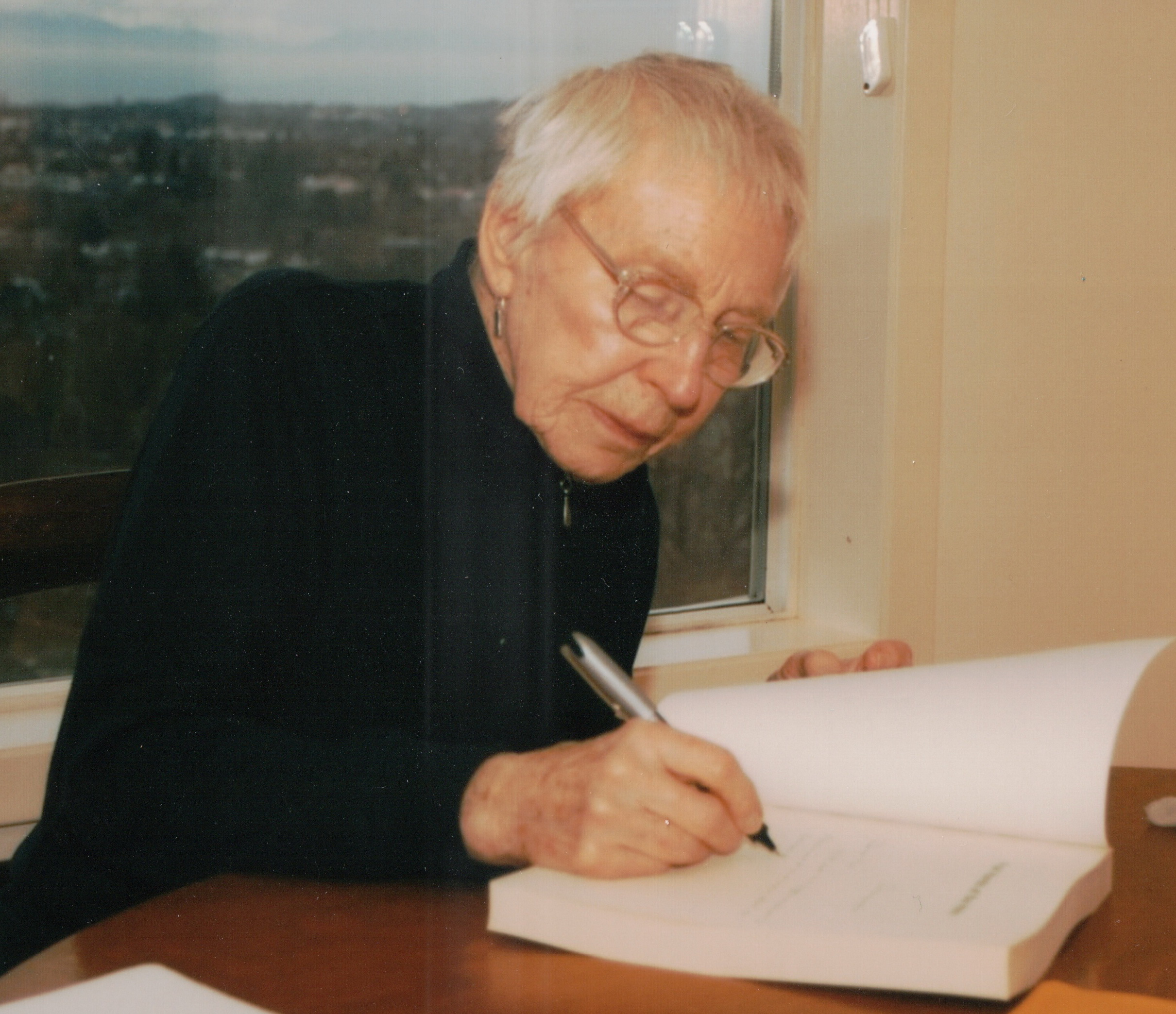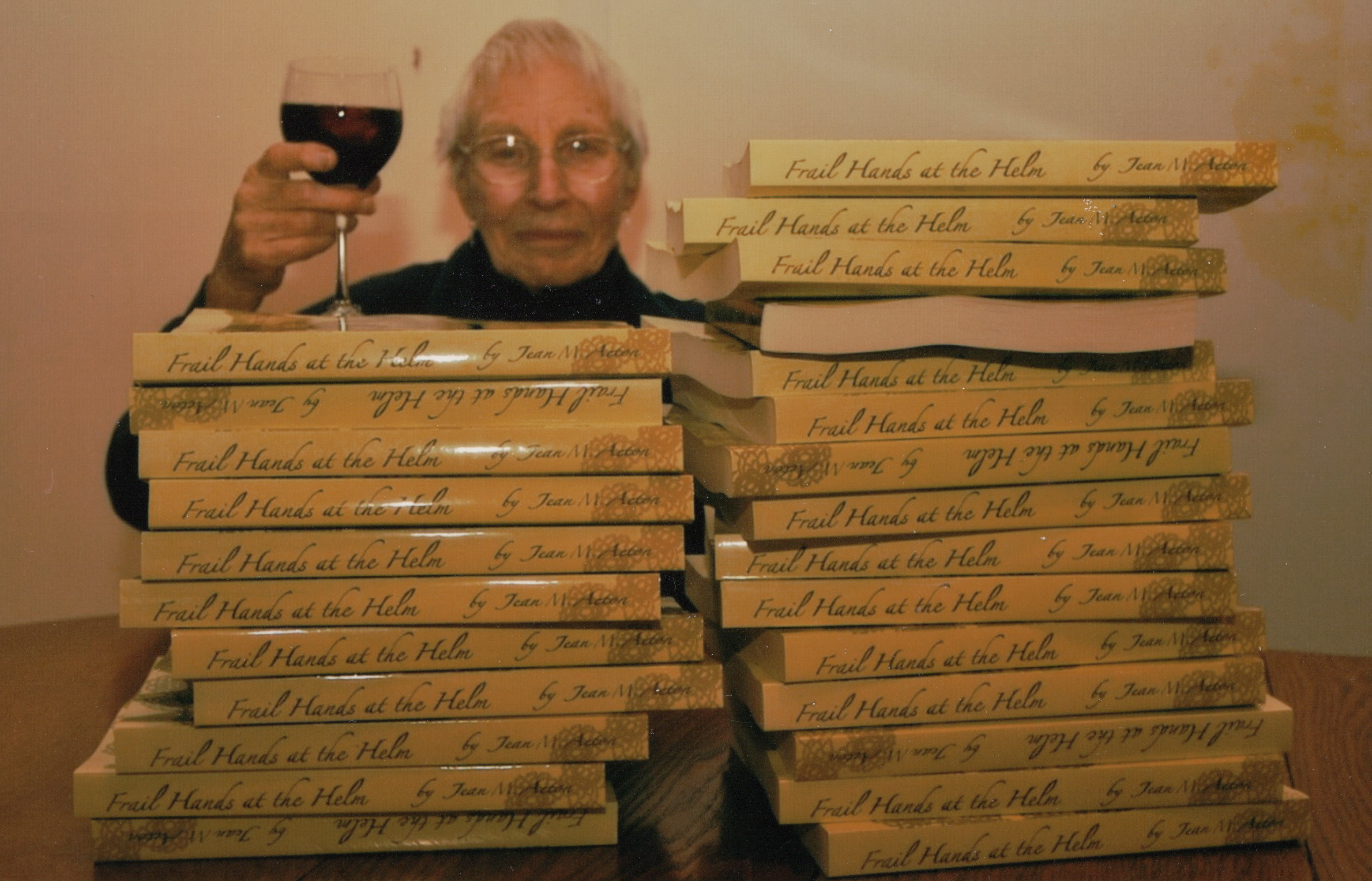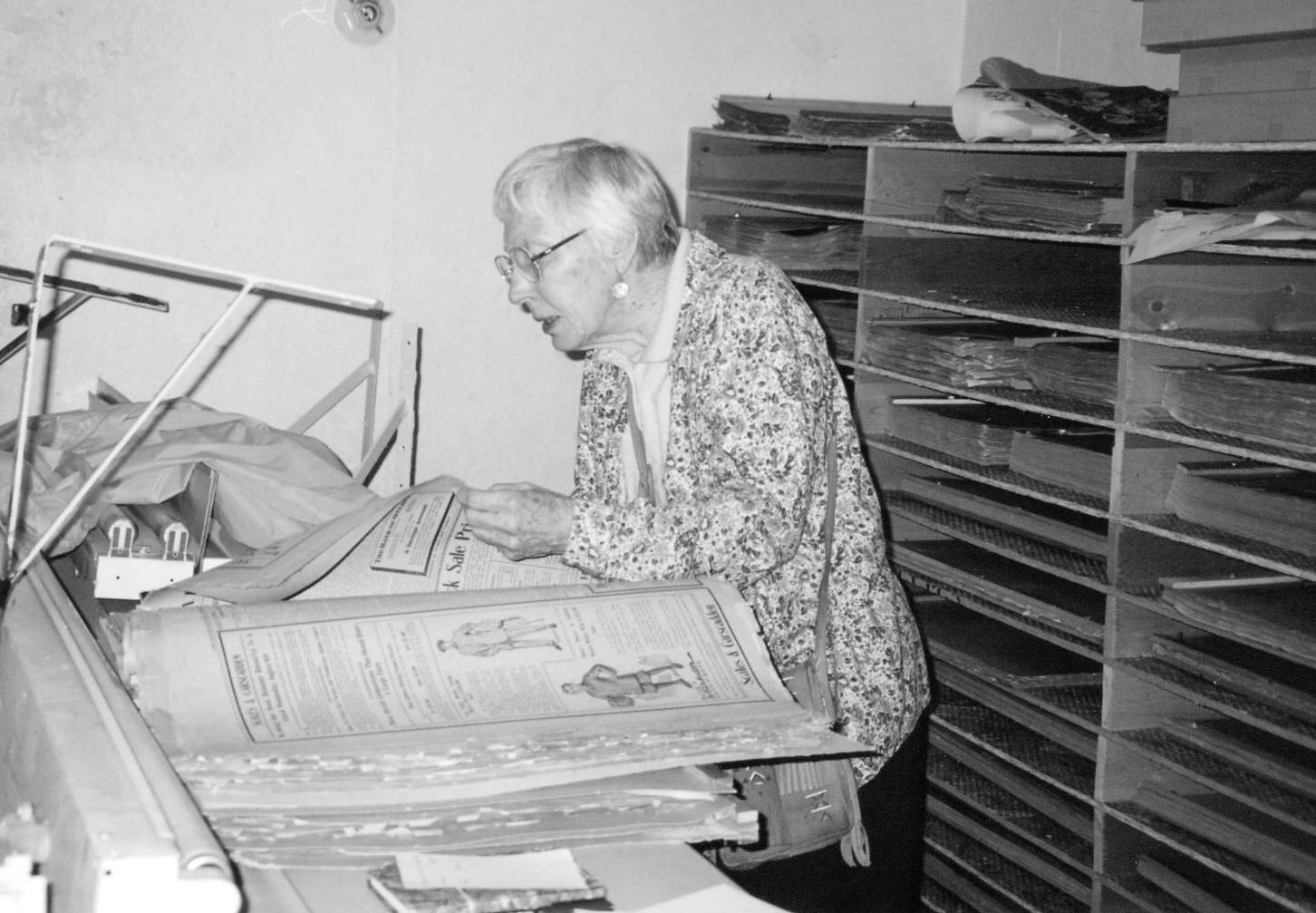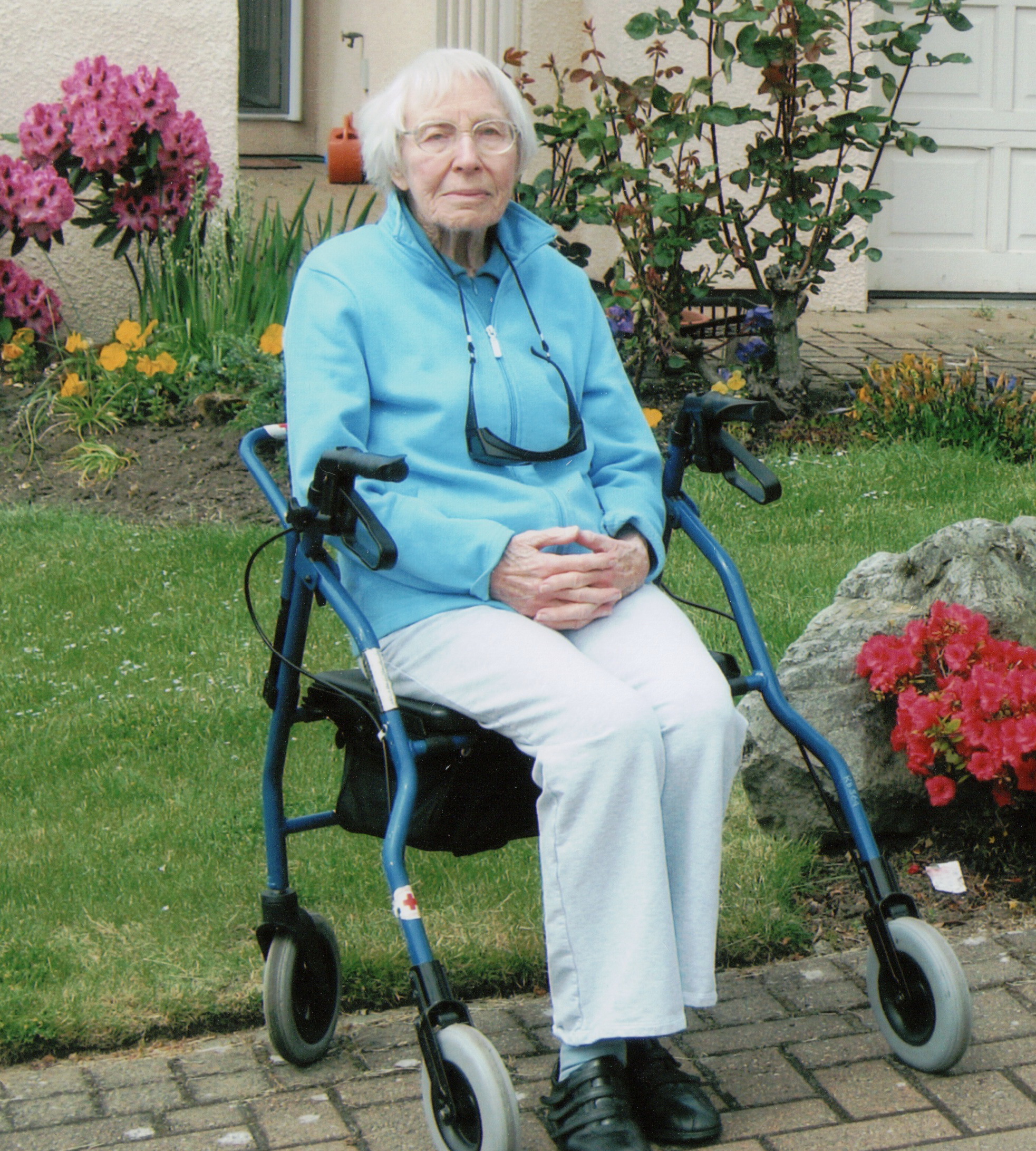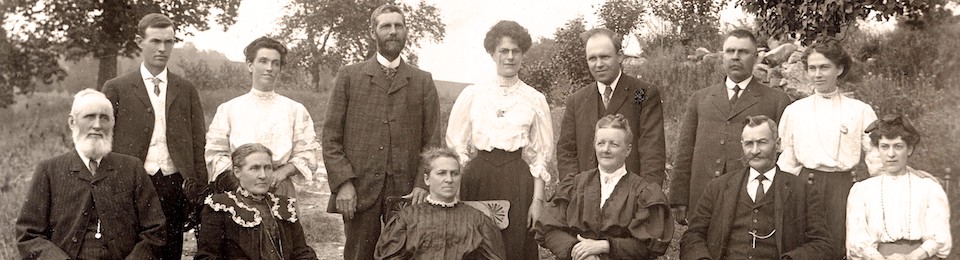
Helen Drummond

Helen and Jim circa 1948

Bio

Helen Jean WATSON was born 29 August 1924 at 29 Wilmot Pl, Winnipeg, to Tom WATSON born Ayrshire, Scotland and Mary Copeland BELL born Haddington Scotland.

Helen married James Hunter DRUMMOND on 28 May 1949 and became a registered nurse around the same time. In 1954 they moved to Garrison, ND with their two sons David and Brian. Their remaining three sons Ian, Kevin and Richard (Rick) were born there. After a few years they continued on to Minneapolis where Jim worked as a radiology technician and Helen as a nurse. Helen passed away on 8 Dec 2010 in Minneapolis, survived by her husband, 5 sons and 9 grandchildren.

Memoir Glimpses – a collection of Helen’s writings about moments from her life.

Preface

Deep inside most of us is a desire, hidden or acknowledged,
to be remembered after we have gone from this earth. Or perhaps
I am taking my own inner feelings and projecting them into the
rest of humanity.

As the years fly by, and they do seem to move much more
swiftly than they used to, this deep-seated need tends to surface
more often. I wish I knew more about my ancestors, and surely
someday my children and their children will want to know more
about my generation.I feel an urgency to start recording the
memories which frequently make their presence felt.

When the Spring Quarterly for Metro U. arrived I read
about a new class being offered in Memoir Writing and it seemed
that providence was taking a hand. This must be where I should
start. I had enjoyed writing little stories and poems as a child,
and a General Writing course in winter quarter had renewed a sense
of excitement when I realized that I could let my words flow onto
paper and have someone enjoy reading them. Now I hoped to progress
to stories of my own life, and after completing just one excerpt
I knew that even if no one ever read them but myself, it would
have been worthwhile.

The selections which follow are but a ripple on the surface-
a brief look at my life as I go back and search my memory bank.
As I compared notes with my sister, I discovered that memories can
vary with the individual.This is not to say that either one is
right or wrong, but only that we all see the past from a different
angle, and recall the details which impressed us most at the time.

It was also interesting to note that each time I sat down to
tackle an assignment which struck a respondent note within me,
several other possible stories would come to mind. Sometimes I
literally had ideas tripping over each other trying to be heard.

But I also learned a valuable lesson — I could not force
a story. I might decide on a topic, but sometimes the words just
wouldn’t come. I had to learn to let my mind wander at it’s own
pace, and once it landed on the right topic, the words would
come.

This collection of pieces represents the writing which
pleased me most — I trust it appeals to the reader as well.

Helen Drummond

Reading — An Inherited Love
April, 1981

Mother never had a chance to complete her formal education ..
Her parents died when she was a teenager and she took over the
responsibility and care of a younger brother. In reality, however,
she was educated more than many college graduates. Her life
experiences certainly contributed to that education, but most
important she was an avid reader. Fortunately it is a trait which
I inherited from her.

As a pre-schooler I can remember walking to the library
with mother every two weeks. It was well over a mile, but in the
heat of summer or cold of winter it was a pleasurable event. The
children’s corner at the library was a haven of contentment. Even
before I could read , the big color picture books told fascinating
stories. No matter how busy mother was, she always found time to
read to us, and for those treasured trips to the library.

After I started school the excitement increased. My
acceptable scholastic ability could probably be credited, at least
partially, to my reading skills. Throughout my school years, books
were friends to fill lonely hours, or rainy days, or vacation time
when days became too long for sustained physical activity.
Birthdays and Christmas were sure to bring new volumes to explore.
As an adult my reading time varied with the hours available —
five young sons left little time for reading much more than bedtime
stories for children — but as the family grew up, my reading time
increased.

As I approach my college graduation, I look forward to reading
literature of choice rather than necessity, but I cannot help but
be thankful that reading was always, for me, a pleasure, not a chore.

The Depression Years
(through the eyes of a child)
May, 1981

The assignment of writing a memoir about an era you have
lived through sounded interesting, but I put it aside and tackled
a different topic. However, each time I paused I found my mind
wandering back to the idea of an era. It beckoned to me like a
tall cool glass of iced tea on a hot humid summer afternoon.
After all, I had been a small child during the Depression years
of the Thirties, and a schoolgirl during the Second World War,
so I had truly lived through two well-known ‘eras.’ Surely I
could record some interesting impressions.

I started to jot down some thoughts about the Depression
years that brought tragedy to so many lives — lost jobs, long
lines at the unemployment office, families on welfare, fathers
in despair. Suddenly I realized that I was describing what I had
been told, or read, not what I remembered.

We were among the fortunate families in the Thirties —
my father was never out of work. As chauffeur, gardener, handyman,
and mechanic for G.M.Black, we lived in an apartment above the
garage, so we didn’t have to worry about rent increases. Apparently
Mr. Black’s business was never in jeopardy, for his style of
living did not seem to vary. I am sure the Depression was discussed
at home, but I don’t remember those conversations. We certainly
could not be considered wealthy in terms of material posessions,
but neither did we ever go hungry or lack the necessities of life.

My mother cooked and sewed for us, fixing good basic meals
that a Scottish family thrives on. She and Dad had both come from
Scotland as young adults and our lives revolved around Scottish
customs and friends. I do vaguely remember wondering why Mr. Dennis
arrived at our back door once a week in his old touring car to
deliver baking that his wife had prepared. The items my mother
purchased from him were the same treats she could bake so well
herself, and why would she spend money for someone’else’s butter
tarts, matrimonial cake, currant buns, and bran muffins? Only
when I was older did I figure out that Mr. Dennis, a family friend,
was out of work and sold his wife’s baking to provide some income.

My friend Betty came to school in tears one day. Her father
had been out of work for a long time and had recently found a job,
so that he was able to buy her a much-needed coat. It was a navy
blue melton cloth, with a half-belt in the back — very nice, I thought!
And Betty had thought so too until some neighborhood children,
cruel in their honesty, told her it was just like the coats that
the welfare department was giving out to their unemployed families.
I didn’t understand why she was so upset, but then I had never
been in the position of defending my father for being unemployed
and unable to provide for the family.

I don’t recall my parents going out together without us
children, although I am sure they must have done so occasionally.
Adult entertainment seemed to consist mainly of poker games for
the men, sewing circle for the women, and parties for the couples
where the children went along and played with the children of the
house until they fell asleep on the coats which were piled on a bed.
Their friends were all Scottish and when conversation got rolling
the brogue in the air was as thick as a Scottish mist.

We always knew when it was Dad’s turn to have the men over
for poker. A green taize cover appeared on the dining room table
after supper, and we were shooed off to our rooms. I was never
sure why the ladies called their group the Sewing Circle — all I
ever saw them do was talk, laugh, and knit. At the parties my
father played the fiddle, Mrs. Muir played the piano, and Scottish
songs and dances were in full swing.

In the summer there were picnics at the local park — no
hot dogs, hamburgers, etc. fixed on a grill, but enough food to
satisfy the hungriest palate; sandwiches wrapped in damp linen
tea cloths, fresh fruit, cookies, cake, thermos’ of milk or tea,
and jars of home-made lemonade wrapped in newspaper to keep them
cold. Blankets were spread out on the ground where the women
watched the babies and toddlers while the men talked or played
horseshoes and the older children played games.

As I look back on the Thirties, I wish I had a greater
sense of the feelings of the times. It seems so shallow to recall
only the good times, and not really be able to relate to the
sadness, frustration, and despair which was so common. At the
same time I give credit to my parents for leaving me the legacy
of always feeling that life is worthwhile. They must have had to
struggle many times to make the dollars stretch, but by example
rather than lecture, they taught us that happiness does not depend
on material possessions. Probably many people of that era felt
differently. I have come to a definite conclusion — I truly cannot
think of myself as a child of the Depression, but in subtle ways
it has affected my inner being.

A Birthday Party
May, 1981

One of the most anticipated events of my childhood was a
birthday party — any birthday party! Certainly my own was at the
top of the list, but any birthday invitation was as exciting as
being asked to have tea at Buckingham Palace. (Of course if I
received invitations to a friend’s party and a Royal Tea on the
same day, I might have had a hard time making a choice, because
Princess Elizabeth was “my age”, and I had always felt a close
bond between us.) But in my middle-class life the thought of an
invitation to tea with a princess did not really enter the realm
of possibility, while birthday parties among my friends were
fairly frequent occurrences. My social calendar, if I had had one,
would have listed the possible engagements for the year in
several categories. The first was the family parties; siblings,
cousins, and children of our parents’ friends, where mothers play
a part in inviting guests. Then there were the close friends who
were certain to invite you to their annual celebration — bosom
buddies who would never leave you out, even if you had a spat
that week. Next were the acquaintances at school who broadcast
glowing accounts of the great party they were planning, but refused
to announce the guest list until the day the invitations were
delivered. They dangled the possibility of an invite like a carrot
on a string, attracting attention from many hopefuls, and an air
of unconcern from others who put on an indifferent front, while
they were really agonizing inside in case they should be left out.
The last group, and this rarely occurred, were the unexpected —
the invitations that arrived like a bolt out of the blue.

Now, to create the setting for this story, I should try to
explain where we lived. There was an area of large upper-class
homes, (many of them would be considered mansions,) and bordering
this was a typical middle-class neighborhood. My father was a
chauffeur, a member of the working class, as were the fathers of
most of my friends, and yet we lived on the grounds of one of the
mansions among the social elite. Most of the “rich kids” went to
private schools so our contact was not frequent.

One of our closest neighbors was a highly respected man
in the upper echelons of local government. He had a daughter the
same age as my sister, Elsie. The year they both turned nine, Elsie
was invited to Gwen’s party, and to my surprise I was included,
although I was not yet seven. This was one of those rare invitations
in the last category — THE UNEXPECTED !—. I was even allowed to
accompany Elsie to the drugstore when she went to spend her alloted
25 cents on a gift. The favorite gift for a girl was a Cutex Nail
Kit, natural color nail polish, remover, and orange sticks in a
pretty gift box. How grown-up I felt! In my age group we still gave
paper dolls, coloring books, or celluloid kewpie dolls.

The day finally arrived,and in our party dresses and black
patent leather shoes, we set off. We had only to walk down the back
lane and into the next yard, but I felt so important we might have
been parading down Portage Avenue. We even went right past the back
door, round the driveway to the massive front door where the butler
let us in. The hardwood floors gleamed so brightly I was sure I
could see my reflection if I kneeled down. Fortunately for my
sister, I restrained the impulse. The armchairs in the entryway were
gigantic. It would have been a struggle for me to get up on one,
not that I would have dared to try — I’m sure noone ever sat on them.

I don’t remember much about the party itself, but I suppose
we played the traditional games of Blind Man’s Buff, Pin the Tail
on the Donkey, and London Bridge is Falling Down. The time after the
games is blazened in my memory. We were playing outside when one
of the boys suggested we go “up in the loft”, apparently a favorite
spot. The building used as a garage was formerly a carriage house,
with an unfinished upper level which was accessible only by a
ladder fastened on the wall. I was an active athletic child who
loved any physical activity and this sounded exciting. As I climbed
up the ladder after my sister, I found you had to turn sideways at
the top and reach across a space to clamber onto the floor above.
It was too far for my short arms to reach, but someone behind me on
the ladder gave me a boost and soon I was playing with the group.
I don’t know exactly what we played, or how long we stayed, but
after awhile someone called from below that it was time for cake
and ice cream. Quickly everyone scooted down the ladder like
monkeys, amid much laughter and chatter. Suddenly I was alone up
there, with my not-too-patient sister standing down below telling
me to hurry up. The longer I looked at that space between the floor
and the ladder, the wider the chasm seemed. There was no way I
could reach that top rung. My knees turned to jelly and tears rolled
down my cheeks. I was embarrassed but I could do nothing about it.
I’m sure my sister would have gladly left me there, but fortunately
family ties held firm and she went to report my plight. Soon the
butler arrived, and like Tarzan at the Saturday matinee he picked me
up and carried me to safety.

My mind draws a blank on the rest of the day. I must have
recovered from my embarrassment enough to enjoy the cake, because I
recall being impressed when each child was given a gift as they left-
a pair of roller skates! But the memory of that space at the edge of
the loft stays with me. To this day I cannot tolerate unprotected
heights. As I write about it I have the feeling my legs have turned to
jelly.

A Dream Fulfilled
April, 1981

I am sure that it came as no surprise to my parents
when I announced my plans to enter nurses’ training after
high school. After all, a career in nursing had been my
ambition since I was a little girl. This interest was
intensified when two cousins came to our city to train as
nurses. They spent their free time at our home, and I often
wonder if they ever tired of my persistent questions about
hospital activities.

At last I was eighteen years old, a high school
graduate, and accepted as a probationer at the winnipeg
General Hospital School of Nursing. The weeks before the
term began were filled with preparations. Uniforms had to
be sewn according to specifications. I can still visualize
the blue dresses, starched bibs, and white aprons piled
on the dining room table. My mother spent hours assembling
the garments on the sewing machine, while my aunt and I
hand-stitched 108 buttonholes. Cnly later did I realize
what love my mother and my aunt put into that project.

Finally. the day arrived when we were to report to the
nurses’ residence adjoining the hospital. My best friend,
Margaret, was also entering training, and together we said
our goodbyes, and jumped on a streetcar for the trip across
town. We shared our feelings of excitement and fear, but
never once did we look back. Why, we were the Florence
Nightingales of the modern age!

Joining 57 other hopeful trainees, most of us with
jumpy stomachs and quivering knees, we wondered how we would
ever remember all the instructions which had been given.
Just finding our way around the hree-storied residence was
a challenge. One rule in particular was firmly engraved in
our minds – “Probationers do NOT use the front stairs!” We
gazed in awe at the wide circular staircase, and wondered
if we would ever achieve the status of senior nurse, and
be allowed to set foot on the shiny hardwood steps.

The next six months were atime of study, hard work, and
adjustment for all of us. When there are 59 girls from various
backgrounds assembled in one building, with a new life style
and rigid regulations, there are bound to be some trying
situations. Margaret and I were fortunate to be room-mates.
We had been close friends since first grade, and had shared
our innermost thoughts and secrets for many years. When
we closed our door on the rest of the world, we could laugh,
cry, or yell as we wished, without wondering what the rest
would think of us.

At the end of the six month probationary period, there
were 52 left in the class. As our parents sat watching, we
proudly entered the reception hall, and one by one we wis
forward to have the Director of Nursing pin a cap on our
heads. At last we were really student nurses- a dream come
true!

The rest of the three years of training was exciting,
exhausting, and educational, but most of all it was what I
had always wanted to do. I truly cannot remember ever wishing
I had chosen another profession. Of course it helped to have
the loving support of my family, and the special friendship
of Jim, who would later become my husband.

When Graduation Day arrived, I was walking on air.
I had achieved my life-long dream, and was bursting with
pride and joy. To this day I have never regretted my decision
to be a nurse. Since then, I have practised my profession
in many ways, in many places. For a few years while I was.
raising 5 sons, they were the main target of my skills, but
as soon as they were a little older, I returned to regular
duty, and have since worked in many different areas of the
hospital.

As I look back over my nursing career, one thought
keeps coming to mind. I am truly fortunate to have found
satisfaction in my chosen field. I wish nothing more than
that for my children.

The Most Important Trip
May, 1981

July 1, 1954 — the date will forever have a permanent place
in that hidden corner of my brain which seems to cherish important
dates. It was Dominion Day, our country’s birthday, traditionally
a day of celebration, excitement, picnics, and fireworks. Usually
this was a day when families would gather together for fellowship
and fun, but today Jim and I would break with tradition — we would
sever the cord that had so far kept us within touching distance
of both our families.

It was dark and dreary as we awoke to a steady rain. I
looked out the window of my mother’s apartment and the world
seemed to be weeping a farewell for us. I felt so mixed up inside,
and being exhausted from yesterday’s packing activities did not
help me to find an emotional balance. Today we would leave our
native land of Canada, the land we loved, and set out to make a new
life in the United States. Oh yes, we were moving less than 400
miles, to Garrison, North Dakota, but it might have been 4000 miles
the way I felt. I had been born, raised, educated, married, and
become the mother of two sons in Winnipeg. My family all lived here:
mother, sister, brother, aunts, uncles, cousins, in-laws, and many
friends, and I knew I would miss them all. But I was excited too!
We were going off on a great adventure, a chance for a new life.
There was no limit to the lofty dreams we had for the future.

After an early breakfast, which was a feeble attempt at
maintaining a normal routine, we loaded the suitcases in my brother-
in-law’s car. We had sold our English Austin, having heard that
parts were hard to find below the border,and planned to wait until
after the move before purchasing another vehicle. Jim’s brother,
with his wife and two year old son, had offered to drive us to our
new home.

Through my tears I watched my mother standing in her
doorway, tears streaming down her face to mingle with the rain,
and I thought my heart would break. We hugged each other, but
words were impossible. The anguish intensified as we drove a few
blocks and repeated the scene with Mom and Dad Drummond. Finally
we headed south on one of the most important trips we would ever
take, and one of the most emotional. Fifty miles down the road
I believe I stopped crying.

The day long trip was an experience none of us would forget.
Four adults, a four year old, 2 two year olds, in a 1952 Chevrolet
which had just had some engine repairs and was not to be driven
faster than forty miles an hour!

We arrived at the border crossing station at Pembina, N. Dakota
where the moving van with our furniture was waiting — it was not
allowed to enter the United States before us. Our passports and
visas were duly inspected and we headed south. There was no turning
back now. In those days we did not have the luxury of a four lane
freeway, only a two lane highway, and we frequently had drivers
behind us wanting to pass and travel at a more acceptable speed
than 40 mph. We made many stops at the side of the road to accomodate
a newly potty-trained two year old — perhaps that was a blessing in
disguise for it gave the impatient drivers a chance to roar ahead.

The miles crept by and about six o’clock we reached Ninot,
N.Dakota, where we were to spend the night. We had decided we did
not want to arrive at our new home late in the evening, travel-
weary and bedraggled. I was glad I did not have to meet any strangers
that night and present a cheerful face. It was a relief for all of
us to get the children to bed in the motel,and collapse on the
closest soft spot. We sat and talked about everything except what
the next day would bring. Tomorrow would be soon enough for that.

November 22, 1963
Memory of a Tragedy

May, 1981
I put the baly in bed for his nap and went into the
living room to have a cup of coffee in front of the T.V. set
before tackling the freshly washed clothes which were waiting
to be folded. Except for the baby I was alone in the house —
one of those rare, beautiful, quiet moments in a home with
five active boys. Much as I loved my busy life in a houseful
of males, I treasured these few minutes of solitude. I made
myself comfortable with my feet up on a footstool.

Suddenly the program was interrupted with a special
bulletin — “The President has been shot!” I felt as if I had
been hit in the pit of my stomach. I was shocked, hurt, angry
that this could happen. What kind of a world were we living
in? Why did some people always think violence was the answer
to a problem? Why didn’t anyone stop the maniac before he did
it? Pointless questions with no answers.

My untouched coffee grew cold. I sat on the floor, as
if being closer to the picture would give me the news quicker.
I listened as the reports came in from the hospital. It didn’t
seem real — surely this wasn’t really happening. It was like a
bad dream.

Finally the announcement came — what I had feared but did
not want to hear — “The President is dead!” Tears flowed unheeded
down my face.

Roy Elmore BOYCE – Growing Up in a Railway Family

Tags

  My grandfather Roy Elmore Boyce (photo left) was born in 1891 in Yarker, Lennox and Addington County, Ontario. Roy’s parents were George Wellington Boyce and Eva Eliza Smith (photos below). Roy was George and Eva’s fourth child and the second son in a family of eight.


By the time Roy was born his father, George, had left his original occupation – farming – in order to work for the railway. At the age of 21, George had married 18-year old Eva Eliza Smith. Their marriage in 1885 took place the same year the Last Spike was driven, completing Canada’s first trans-Canada railway. Aside from the first few years of their marriage, George spent most of his life working with the railway.

Roy’s father George had probably left farming because of the financial uncertainty of that type of enterprise. With a quickly growing family, George and Eva no doubt welcomed his getting a job that offered a regular income and some security.

The records suggest that George became a railway labourer with the Bay of Quinte Railway, a primary employer in the Harrowsmith area. Although it’s not clear precisely when, or even if, he was a labourer, documents indicate that by the time their sixth child, James (‘Bill’) BOYCE, was born in 1895, George held the position of railroad foreman. Two more children followed, so that by 1901, the Boyce household numbered ten, including adults and children. From family birth and death registrations we learn that George spent the last 30 years of his life, from 1895 to 1925, as a railway section foreman. His obituary states that he was “61 years of age and … was for many years section foreman on the C.N.R., which position he held at the time of his death.” The obituary goes on to say that “practically all of his life was spent in Harrowsmith”, a fact supported by census records and the locations of the children’s births.

Growing up in Harrowsmith, situated close to Kingston in Frontenac County, Roy and his siblings grew up with regular contact with other communities served by the railway. In this thriving community the family would have had access to general stores, a post office, hotels, blacksmiths, hotels, taverns, butcher shops, an undertaker, tailor and millinery stores, bakeries, churches, livery stables, and other amenities associated with ‘town living’. The children would have had numerous friends to play with, and would also likely have come to know all types of personalities and characters in the community.

Roy and his siblings grew up at the time their father was permanently employed by, and receiving a salary from, the railroad company. From several family photos it appears that the family may have lived in close proximity to the railway and, if so, would be used to the frequent sounds of trains passing their home.

A family story relates that the Boyce family home was a ‘railway house’ supplied by the company to railway employees and their families. Because of their proximity to other railway employees, my grandfather may have taken for granted the constant stream of railway colleagues and their family members, and played with other ‘railway children’. Roy would have grown up understanding the importance and inflexibility of railway schedules, having knowledge of railway jargon and operations, and being mesmerized by the magic of telegraphy and other developments considered modern technology at that time.

While the position of railway foreman was a posting with considerable responsibility, the Boyce family was by no means affluent. However, a foreman’s position did provide a regular pay cheque which offered a degree of stability and security which the family could count on for the foreseeable future – a major consideration given the large brood of Boyce children. Being the middle child, Roy must have seen the energy and resources required to raise a family, something that may have influenced his thinking about the need to become self-reliant as soon as he could.

It seems likely that the Boyce household was that of a young, large, boisterous, family with lots of teasing and jokes.

The Boyce’s were a close family, and this strong familial connection continued throughout the siblings’ lives. Roy had four younger siblings, Vera, ‘Bill’, Percy and Velma, whom he  helped nurture and protect. His two older sisters, Gert and Nell, and older brother, David, in turn, often came to his rescue, extricating him from scrapes and misadventures from school bullies, and so on. Nell, in particular, felt a duty to look out for Roy, long after he was married and had his own family.

 As staunch Methodists the Boyce family adhered to the strict tenants of that faith regarding church attendance, Sunday school for children, and the appropriateness or inappropriateness, of dress and activities such as gambling and dancing. George’s obituary notes that he was “well-known and much respected …a Methodist in religion and a member of St. Paul’s church”. One family story relates that Eva was involved in the temperance movement, although whether this was because of a personal experience (did a member of Eva’s family drink to excess?) or support for a cause that was sweeping the country at the time, is unknown.

 Roy attended school until he was 14 years old and, as was normal at that time, left after Grade 8, referred to as “Senior Fourth”. After he left school in 1905, he worked as a box maker at the Harrowsmith Cheese Factory. At that time Harrowsmith was famous for the cheese produced by this local factory. However, the factory only operated from May to September because the cows did not produce enough milk during the winter months to keep the plant open. Realizing there would be no secure future in making boxes at a seasonal cheese factory he at some point, probably with his father’s urgings and using his connections, started working for the railway.

Telegraphy appealed to Roy more than physical labour, or track or locomotive maintenance. He studied telegraphy in Yarker, Ontario while he worked for the Bay of Quinte Railway, earning $10 a month. Yarker was a community on the same railway line as Harrowsmith, and might have been close enough to allow him to stay at home between work shifts. Although his career is uncertain, it is believed he moved to Moscow, Ontario where he worked as an assistant agent, and then to Bannockburn, Ontario, probably as an assistant agent. After he became more established, Roy appears to have worked various positions and shifts (e.g. night clerk, telegrapher, assistant agent), which meant moving around, living and working in different communities.

Roy must have seen opportunities for a full agency in western Canada; opportunities that didn’t exist in the east. Moving West offered him a chance to expand his horizons and his career. “Railway work at that time was probably seen as an exciting career, not unlike going into aviation 20 or 40 years later.” (M. Boyce)

In all his positions, Roy dealt with a wide variety of railway employees and a cross-section of the public, becoming skilled at what we now call ‘public relations’. He was outgoing and affable, had a hearty laugh, loved a good conversation and seems to have thoroughly enjoyed socializing with a wide variety of people. By 1910, possibly earlier, Roy had become a member of the Telegraphers’ Association of _______ and his railway career was fully launched.

Like many young men from Ontario in the early 1900s, Roy migrated West where railway branch lines were quickly spreading across the prairies. Grain elevators and railway stations often became the hub of these towns, servicing both town people and those living in nearby farms. After various transfers and positions, my grandfather found himself in Virden, Manitoba where he worked as night telegrapher with Mr. Simpson, with whom he became lifelong friends.

Here he met Susan Matilda Dodds.

ACTON, Elizabeth (‘Lily’), 1856-1933

[Please keep checking this space, Elizabeth’s story will be told here as material and photos become available, the last information and / or images added 21 November 2023]

Elizabeth Acton-bef 1902ELIZABETH (‘Lily’) ACTON was born February 24, 1956 at Bewerley, in Pateley-Bridge, in Yorkshire, England to Richard ACTON  and his wife Elizabeth SHENTON.

Lily’s father was the gardener at Bewerley Hall, which was a large manor house with extensive gardens (check the website http://www.lostheritage.org.uk for photos). The manicured lawns and shrubs, and large kitchen (i.e. vegetable) gardens were completely unlike the frontier Canadian experience the family was about to embark upon.

Photo above courtesy of D. Acton, Saskatchewan

About 1857 when Lily was 2 years old, her parents, siblings and some extended family immigrated to Rockingham, in northern Ontario, Canada. Here they optimistically broke land, constantly picked the rocks for which the area was aptly named and eked out a living farming.

In 1864 her mother died in childbirth, leaving 8 year old Lily in the care of her older siblings. A housekeeper, Mary COULAS, was hired to help with the young family. In 1866 Lily’s father married Mary. With this new step-mother numerous step-brothers and step-sisters were born into the family.

ACTON1974-001In 1871, the family – now 11 in number (Lily, her father, step-mother and nine siblings/step-siblings) lived in the small log cabin on the Rockingham farm.

Photo right from the author’s collection. Taken about 1971 on the Rockingham farmstead. The original log house is clearly visible. 

In the 1881 census, Elizabeth (always ‘Elizabeth’ and not ‘Lily’ for official events such as census) , 25 years old, had moved to Montreal and worked as a servant for the family of Edward and Mary Stewart. Montreal was an obvious place for Elizabeth to go for work, as she had at last one sister who had married and lived there.

After the 1881 census Lily disappeared from the census records until we can pick up her trail again. We know she traveled to Saskatchewan to visit her brother Samuel ACTON who had homesteaded and married Janet WALKER there in the 1890s. ACTON1902-002While visiting she met and married local farmer John Harold (‘Harry’) BIRCH, who was born in England December 14, 1859 (Source: John’s death registration).

Photo left

Elizabeth (Lily), 46,  and John (Harry), 43, were married on her brother Samuel’s farm in 1902. In this wedding photo they are seated to the left of centre in the second row. A curious feature of this photo is that it is obviously taken outdoors, during what appears to be winter time (lack of vegetation, fur hats being worn by the men). Why would the formal wedding photo be taken outdoors in winter? Perhaps it was the only place for the photographer to assemble such a large group.

Lily and Harry farmed just south to the Qu’Appelle Valley, between Ellisboro and Wolseley. In this pre-television age, local communities created their own entertainment. One such event was an annual picnic held by the Qu’Appelle River. Third and fourth from the right are Lily (white hat) and Harry (on Lily’s left). This photo was likely taken in 1912.ACTON1900-000

After some years of farming, Lily and Harry rented their farmland. Acton-Birch Victoria-bef 1927In 1921 (according to both their death registrations) they moved to Victoria, British Columbia where they bought a house on Chaucer Street.

Photo left, L to R: Lily, Janet (WALKER) ACTON, Janet’s husband and Lily’s brother Samuel ACTON, and Harry. Date of photo between 1921 and 1927.

Photo below: Birch home on Chaucer Street, from the collection of K.H.of Saskatchewan

Harry Birch home 2-from Kim

Here they entertained Saskatchewan relatives. Photo below taken after Samuel ACTON’s death in 1927 and before 1933. L to R: Lily, Janet (WALKER) ACTON, unknown woman, Jenny ACTON, unknown woman and Harry.Acton-Birch Victoria-aft 1927

Harry & Lil Birch-Buchart gardens - from Kim

Photo above taken at Butchart Gardens, Victoria between 1921 and 1927. Photo from the collection of K.H.of Saskatchewan

Lily and Harry died in Victoria, British Columbia, Lily on 22 September 1933 and Harry 21 April 1946. They are both buried in the Ellisboro Cemetery in the Qu’Appelle Valley, Saskatchewan.

Acton-Birch cemetery monument

Moffat, John (‘Jack’) Brown (1942-2014) Condolences

The following are a few of the condolences have been received since Jack’s death. Only the initials of senders have been used, and slight editing has been done to protect personal information of living persons.

If you would like to add a story, remembrance or condolence message please LEAVE A COMMENT on this page or click here to use the email address theirownstories@gmail.com

Messages will continue to be added  – there is NO deadline.

*****************

Where do I begin with Memories of Jack?

  • Gentleness & caring – in action and in words
  • Pride in his Scottish ancestry
  • The morning papers – at least two every day
  • The precise and measured in the way he took care of things
  • Rides in the Jag
  • A discerning taste when selecting pubs and pub grub
  • A proud and caring father and grandfather
  • An astute observer of people
  • A vast knowledge of Scottish genealogy and an openness to share if asked
  • The telescope and noting the arrival and departures of cruise ships
  • A soothing and almost lyrical voice
  • Willingness to help you whenever he could
  • A great sense of humour and a dry wit
  • A wonderful story teller
  • And above all a true friend

From D. N., Edmonton, Alberta

^^^

Still finding it difficult to take in the fact I will not get to see Jack again, a very big influence in my life particularly in last 6-7 years, some great times over a drink or two listening to many stories, will be greatly missed, condolences to you Pat and rest of family. A.M., Calgary, Alberta

^^^

Jack was a gentle man as well as being a gentleman. How fortunate we are to have known him for however short a time. H. & J. B., Calgary, Alberta, Canada

^^^

After reading Jack’s obituary, as well as condolences, memories flooded back. And seeing his picture again was wonderful as well. Jack really did have a way of always making you feel welcome and making sure you had everything you needed. He was very knowledgeable about many things and amazingly helpful as a handyman as I realized in Ft. McMurray while trying to get a house ready to sell without the man of the house around! Jack (and Pat both) stepped in with enthusiasm and got the place whipped in to shape in no time. He was a true gentleman with a quick wit and great sense of humour. We are still having a hard time getting our heads around his passing. Our deepest sympathy to the entire family, this loss will be deeply felt. L. & D. N., Edmonton, Alberta, Canada

^^^

Words cannot explain just how sorry we are to hear of Jack’s passing. How is it possible? It seems that just a few weeks ago we were sharing a wee scotch as he straightened me out on Scottish history once again. I’ll remember his often dry wit and his very sharp mind. In a room full of people he was the one I would drift towards to enjoy his humour and stories and polite verbal jabs at me. A man’s man. Our condolences to Pat and the entire family.  From M. & K. S., Victoria, British Columbia, Canada

^^^

So sad to hear about Jack. It has been so sudden for you all to take in. Kinder on Jack but so much harder for the family. You must be proud to have had such a kind gentleman as a husband. I will always remember him. Please pass on our thoughts to all the family. I know it is a very hard time for you all. You and Jack packed so much into your lives. All your travels, family visits. A lovely box of memories for everyone, including myself. LA. S., Elderslie, Renfrewshire, Scotland

^^^

From the first time we met Jack, we were impressed by his warmth, kindness and humour, and we’ve always enjoyed our times with him. With virtual hugs, F. B. & M. Z., Victoria, British Columbia, Canada

^^^

I am so sorry to hear about Jack. So shockingly quickly. It was a great privilege to know him and I am so glad that R. and I had the opportunity to meet him in the past couple of years. He had a wonderful sense of humour and that wry smile will live on in my memory of him as well as his soft and gentle voice and manner. He was a real gem and will indeed be missed by many. Thinking of you at this sad time and sending you our love, L. & R. H., London, England

^^^

I am so sorry to hear the news of Jack. The times I met him I enjoyed his company. My father talked often of the times he spent with you and Jack on the island and how well you both had treated him. He mentioned fond memories of having touring the island and having a drink in the evening with you. When things settle a bit, let me know when the wake will be held and I will try to make it. G. & J. H., Vancouver, British Columbia, Canada

^^^

All we can do is offer our very heartfelt sympathy to you and all the family. We were looking forward to the day when you both came to Australia for a visit and we could relive our adventures on the river cruise. I’m pleased you at least had your Asian holiday. The wake/celebration of Jack’s life will certainly be an interesting one – just thinking of his time in Australia when he was young, he saw more of the country than most Aussies do. The only problem he would hate to miss being there with everyone to enjoy it. N. & K. M, Queensland, Australia

^^^

I am so, so sorry to hear this terrible news. I was just getting to know Jack. You had such a great partner in him. G. W., Shawnigan Lake, British Columbia, Canada

^^^

Please accept my sincere sympathy on Jacks passing. I passed this news along to my mother, who has asked me to extend her condolences to you, as she does not have e-mail any more. I know you have had a very tough year with the loss of your mother and now Jack. We are thinking of you, and hope that the memories of your years together will offer some comfort during this difficult time. H.D. & A.M., Calgary, Alberta, Canada

^^^

We were so saddened to learn that Jack passed away. We are thinking of you. Jack was such a special man, we were fortunate to know him and will always carry him in our hearts. He made everyone feel that they were special, that there was nothing else in the world that was more important than that moment in time, that connection, that intimacy, that shared laugh or story. It was a true gift. You are very much in our thoughts. J.O & G. E., Canmore, Alberta, Canada

^^^

We are very saddened to learn of Jack’s passing. He was a very fine and caring person who became known and respected as a part of our larger family. You have our deepest sympathy. R. & M. A., Victoria, British Columbia, Canada

^^^

Oh that is devastating news about our dear Jack. Very hard to comprehend. And to develop so quickly! Yes it is wonderful that you did that trip. And for H. and I it was more than wonderful that we got to spend time with you both, see where you lived, be driven around in the Jaguar and hear some of Jack’s great yarns. Treasured times, now even more treasured. The last time you wrote you said he had the map of Australia in one hand and a calendar in the other. That was GOOD news.  Words inadequate at a time like this but you can be assured that we are thinking of you and sending positive energy across the Pacific. Know that there two people here in Australia who loved him very much and feel very privileged to have met him and spent time with him. He had a very special place in our hearts, as you do. We wish there was more that we could do but….

For now, much love, R. B. & H. P., Victoria, Australia

^^^

I’m so sorry to hear your news about Jack. Our condolences to you and your family. He will be greatly missed. He was such a nice fellow. Thinking of you. K. R., Victoria, British Columbia, Canada

^^^

MOFFAT, John (‘Jack’) Brown (1942-2014) Biography

In the past few months the content of this blog has altered slightly; first with the obituary, life story and condolences received for my mother Jean ACTON and now with the same for my husband John MOFFAT. However, their inclusion in the blog is apt – the title of the blog “Remembering our ancestors whose stories have been lost or forgotten” still applies. These individuals, although deceased within the last year, ARE the ancestors of the young members of their families. Although their physical flame has been extinguished, it is important that their story live on and not be forgotten.

Below is the obituary of John MOFFAT, his life story and photographs will be added, condolences received have been posted July 17, 2014. If you would like to send a message to the family, or have memories or stories of Jack you’d like to share, please LEAVE A COMMENT or click here to use the email address theirownstories@gmail.com. With the exception of the family names noted in the below in standard obituary format, no names of living people will be used to protect their privacy.

Please keep checking this space, other photos and stories will be added – there is NO deadline.

Moffat0001

 John (‘Jack’) Brown MOFFAT, 31 March 31, 1942 – 28 June 2014

Jack died peacefully, after a brief illness, 28 June 2014 in Victoria, British Columbia. Born in Sanquhar, Dumfriesshire, Scotland on 31 March 1942 to Thomas Brown Moffat, coal miner, and his wife Catherine Wilson Brown, Jack is survived in Canada by his wife Patricia Acton, daughter Fiona (Paulo) Moffat, son Andrew, granddaughter Brianna Novak, sister Dorothy (Derek) Rowan, niece Lesley (Henk) Rowan and stepfamily Daniel, Angie, Thomas and Samuel Schick. In Scotland Jack is survived by his brother William (Gwen) and numerous nephews, nieces, cousins and extended family; he was predeceased by his sisters and brothers-in-law Janet (William) Brown and Mary (David) Wylie; also brothers Andrew and Thomas.

Trained as a millwright, Jack initially followed his ancestors’ calling and worked in the Scottish coal mines (1957-1962, 1970-1977), however his sense of adventure took him round the globe, first as a Marine Engineer with Shell Tankers Ltd. (1962-1964, 1968-1969), and then as an emigrant to Australia as a ‘10 pound pom’. While in Australia (1966-1968) he explored and circumnavigated the country in an old Holden car, and worked for several major mining companies. Back in Scotland he worked (1969-1970) as a steel erector of factories and then in an explosives factory (1977-1980). He immigrated to Ft. McMurray, Alberta, Canada and worked for Syncrude Canada (1980-1999) after which he was employed by the Municipality of Wood Buffalo until his retirement and move to Victoria in 2005.

In retirement Jack continued to travel the globe, and made several trips ‘home’ to Scotland to visit family and research his ancestors. Jack had a lifelong interest in genealogy and Scottish history; as well as his own ancestors he conducted research for many friends and was always ready to show others how to research their roots. In lieu of flowers a donation to the Victoria Genealogical Society (www.VictoriaGS.org) may be made so that others can continue to learn how to research their family history.

No funeral service will be held, a wake will be announced at a future date.

Tangled Web of Family Relationships

Tags

, , , , , , , , , , , , ,

[Please keep checking this space, additional material and photos will be added as they become available, additional tags will be added as dates are clarified. The last information and / or images added 20 May 2014]

Family history often a confused mixture of relationships; the story of the WATSON (including MUIR) – ACTON  families is no exception. The photo below was taken about 1938-39 in Saskatchewan at one of the many family picnic get-to-gethers of the WATSON-ACTON families. The location of the photo is likely beside the Qu’Appelle River, near Ellisboro, probably just beside the old bridge.

After Thomas WATSON and his wife Jane MUIR immigrated to Saskatchewan in 1910, their sons (James (#15 in the photo), William (#4), Alexander (deceased at the time of the photo), and daughter Helen (Nell) (#40) married members of the Acton family. The resulting combined and extended families led to a tangled web of relations and cousins. While Thomas (d. 1932) and Jane Watson (d. 1933) are not in this photo, many of their descendants are.

 ACTON1937-004a-names

Names of people in picnic of Watson – Acton families and their relationship to Thomas and Jane (Muir) Watson. Names of persons still living have been left blank(__).

1. Joseph (‘Joe’) Francis ACTON (1886-1972): husband of Nell (#40); father of Dick (#12) and Tom (#8); son-in-law of Thomas WATSON and Jane MUIR.

2. [Living son] WATSON: step-son of Bill (#4); brother of Janet (#23); grandson of Thomas WATSON and Jane MUIR

3. Samuel (‘Sam’) Acton WATSON (1920-2002): son of Jim (#15) and Nancy (#38); brother of Doris (#29), Bill (#13), Muriel (#37), and __ (#28); grandson of Thomas WATSON and Jane MUIR.

4. William (‘Bill’) Muir WATSON (1892-1973): step-father of Bob (#2); brother of Nell (#40), Jim (#15) and John (#35); son of Thomas WATSON and Jane MUIR.

5. Jeff PARKER: husband of Edith (#20)

6. Robert WALKER (Sr.): nephew of Janet (#16); married to Lilly BAKER (not in photo), sister of Bill Sharpe’s wife Priscilla BAKER.

7. [Living son] ACTON: son of Dick (#21) and Annie (#27); brother of __ (#39), __ (#36), __ (#19), __ (#18), __ (#26) and __ (#22).

8. Thomas (‘Tom’) Watson ACTON (1917-1991): son of Joe (#1) and Nell (#40); brother of Dick (#12); grandson of Thomas WATSON and Jane MUIR.

9. William (‘Bill’) SHARPE: Husband of Priscilla BAKER (#25);

10. Robert WALKER (Jr.): son of Robert WALKER (Sr.) (#6)

11. Anne (Gompf) McKINNON: wife of Alex (#14); mother of Vi (#30)

12. Richard (‘Dick’) William ACTON (1916-1990): son of Joe (#1) and Nell (#40); brother of Tom (#8); grandson of Thomas WATSON and Jane MUIR

13. Richard William (‘Bill’) WATSON (1916-2000): son of Jim (#15) and Nancy (#38); brother of Doris (#29), Muriel (#37), Sam (#3) and __ (28); grandson of Thomas WATSON and Jane MUIR

14. Alexander ‘Alex’ McKINNON: husband of Anne (#11); father of Vi (#30); brother of Annie (#27)

15. James (‘Jim’) Muir WATSON (1888-1965): husband of Nancy (#38); father of Doris (#29), Bill (#13), Muriel (#37), Sam (#3) and __ (28); brother of Bill (#4), Nell (#40) and John (#35); son of Thomas WATSON and Jane MUIR

16. Janet (Walker) ACTON (1859-1948): (widow of Samuel ACTON; Samuel died in 1927 therefore not shown in photo); mother of Nancy (#38), Dick (#21), Bob (#32) and Jenny (#17).

17. Janet (‘Jenny’) Ethel ACTON: daughter of Janet (#16); sister of Nancy (#38), Dick (#21), and Bob (#32).

18. [Living son] ACTON: son of Dick (#21) and Annie (#27); brother of __ (#39), __ (#7), __ (#36), __ (#19), __ (#26) and __ (#22).

19. [Living daughter] ACTON: daughter of Dick (#21) and Annie (#27); sister of __ (#39), __ (#7), __ (#36), __ (#18), __ (#26) and __ (#22).

20. Edith (Allen) PARKER: wife of Jeff (#5)

21. Richard (‘Dick’) Arthur ACTON (1894-1984): son of Janet (#16); husband of Annie (#27); father of __ (#39), __ (#7), __ (#36), __ (#19), __ (#18), __ (#26) and __ (#22); brother of Nancy (#38), Bob (#32) and Jenny (#17).

22. [Living son] ACTON (back of head): son of Dick (#21) and Annie (#27); brother of __ (#39), __ (#7), __ (#36), __ (#19), __ (#18), and __ (#26).

23. Janet Mae WATSON: step-daughter of Bill (#4); sister of Bob (#2); granddaughter of Thomas WATSON and Jane MUIR

24. [Living daughter] ACTON: daughter of Bob (#32) and Sarah (#31); sister of __ (#34) and __ (#33).

25. Priscilla (Baker) SHARPE: wife of (Bill (#9)

26. [Living son] ACTON: son of Dick (#21) and Annie (#27); brother of __ (#39), __ (#7), __ (#36), __ (#19), __ (#18), and __ (#22).

27. Annie (McKinnon) ACTON: wife of Dick (#21); mother of __ (#39), __ (#7), __ (#36), __ (#19), __ (#18), __ (#26) and __ (#22); sister of Alex (#14)

28. [Living daughter] WATSON: daughter of Jim (#15) and Nancy (#38); sister of Doris (#29), Bill (#13), Muriel (#37), and Sam (#3); granddaughter of Thomas WATSON and Jane MUIR

29. Doris (‘Doris’) Janet WATSON (1915-ca 1985): daughter of Jim (#15) and Nancy (#38); sister of Bill (#13), Muriel (#37), Sam (#3) and __ (28); granddaughter of Thomas WATSON and Jane MUIR

30. Viola (‘Vi’) MCKINNON: daughter of Anne (#11) and Alex (#14); niece of Annie (#27)

31. Sarah Hastings (Johnston) ACTON (1896-1986): wife of Bob (#32); mother of __ (#34), __ (#24) and __ (#33), sister of Mary (#41)

32. Robert ‘Bob’ Walker ACTON (1896-1966): son of Janet (#16); husband of Sarah (#31) father of __ (#34), __ (#24) and __ (#33); brother of Nancy (#38), Dick (#21), and Jenny (#17).

33. [Living daughter] ACTON: daughter of Bob (#32) and Sarah (#31); sister of __ (#34), and __ (#24).

34. [Living daughter] ACTON: daughter of Bob (#32) and Sarah (#31); sister of __ (#24) and __ (#33).

35. John (‘John’) McConnell Muir WATSON (1903-1994): brother of Bill (#4), Jim (#15) and Nell (#40); son of Thomas WATSON and Jane MUIR

36. [Living daughter] ACTON: daughter of Dick (#21) and Annie (#27); sister of __ (#39), __ (#7), __ (#19), __ (#18), __ (#26) and __ (#22).

37. Muriel Mae WATSON (1919-2000): daughter of Jim (#15) and Nancy (#38); sister of Doris (#29), Bill (#13), Sam (#3) and __ (28); granddaughter of Thomas WATSON and Jane MUIR

38. Agnes ‘Nancy’ Elizabeth (Acton) WATSON (1892-1981): daughter of Janet (#16); wife of Jim( #15); mother of Doris (#29), Bill (#13), Muriel (#37), Sam (#3) and __ (28); sister of Dick (#21), Bob (#32) and Jenny (#17); daughter-in-law of Thomas WATSON and Jane MUIR

39. [Living daughter] ACTON: daughter of Dick (#21) and Annie (#27); sister of __ (#7), __ (#36), __ (#19), __ (#18), __ (#26) and __ (#22).

40. Helen (‘Nell’) McNab (Watson) ACTON: wife of Joe (#1); mother of Dick (#12) and Tom (#8); sister of Bill (#4), Jim (#15) and John (#35); daughter of Thomas WATSON and Jane MUIR

41. Mary JOHNSTON: sister of Sarah (#31)

The picnic was likely held on a Sunday afternoon, after the 11 AM church service in the rural Rosewood United Church. After attending church, the families would briefly return to their farm homes. All family members remained dressed in their Sunday best; they would not change after attending church. Quickly tying on an apron, the women would pack food that had been prepared the day before. The men would conduct a last minute check of any farm animals that might require food and / or water before evening; if this necessitated a change into ‘chore clothes’ the white shirts, ties and dark suit trousers would be put on again before leaving for the picnic. Cars were quickly packed with excited children and delicious and plentiful home cooked food.

ACTON1938-052ACTON1938-051Each housewife would pack more than enough for her own family, but once at the picnic site, all food would be placed on picnic tables or blankets for a large ‘pot-luck’ feast including jellied salads, potato salad, canned chicken, hams, sandwiches (canned salmon, roast beef and pork, chicken, ham), pickles (dill, mustard, sweet, bread-and-butter), homemade buns and bread, cakes, ‘squares’, pies and cookies. Large jars of homemade lemonade would be available for the children, multiple thermos of hot tea would be provided for the adults. Several families would also bring a ‘cream can’ of cool drinking water.

The afternoon’s entertainment was informal: the woman would gather and discuss children, gardens, recipes.

The men would discuss cattle, crops, weather, the price of grain, the lack of railway cars to ship the grain, the cost of farm machinery, the state of the roads, and the other constant challenges of farm life. The young children would dash amongst the trees involved in their own games of tag, or games of, the now politically incorrect, ‘war’ with pretend guns made from tree branches.ACTON1938-054


ACTON, Jean Marjorie (1916-2013) Condolences

The following are a few of the condolences have been received since Jean’s death. Only the initials of senders have been used, and slight editing has been done to protect personal information of living persons.

If you would like to add a story, remembrance or condolence message please LEAVE A COMMENT on this page or click here to use the email address theirownstories@gmail.com

Messages will be added as they are received – there is NO deadline.

SCAN0205

Jean Marjorie Acton (nee Boyce), May 16, 1916 – September 9, 2013

^^^

                   She was a great lady. (from Jean’s brother M. Boyce, Calgary, Alberta)

^^^

I have read the biography piece about your Mom and Dad several times. It is interesting to see how ordinary Canadian lives are, in fact, extraordinary. (from D. G., Halifax, Nova Scotia)

^^^

Sorry to hear about your mother’s death. She was part of your daily life for so many years and you will miss her greatly. The older we are when we lose a parent the harder it is to realise that they are no longer there. You will be able to take comfort from knowing that you were a great support to her. (from G. & M. B., Nairn, Inverness, Scotland)

^^^

I am writing this condolence on behalf of D. R; D.R. and his wife L. purchased the home on Lake Crescent that was owned by your parents. D.R. and L. both worked at Kelsey with L. as the Program Head for the Kelsey CNA Program (pre-cursor to the LPN program). L. & Jean had a significant connection with their interest in nursing
education. L. passed away in 2012.

I am D.’s first cousin once removed and I grew up at Abernethy, near
Lemberg, near Rosewood. Although I did not know your parents, the Acton name is well known to me. I extend my sincere condolences, and those of D., as well as expressing my delight in the wonderful website/blog that you have created to honour your family history. (from C.B., Saskatchewan)

^^^

I am certain that your wonderful memories of such an awesome woman will comfort you and bring smiles for years to come. Please know that others are thinking of you as you go through this sad time. Such a wonderful soul is now back with Tom. Jean was a
key mentor for me in my nursing career. When Jean retired from SIAST she encouraged me to take her position. Prior to that I had the privilege to work with Jean, seeing first hand, her gentle wise presence as a leader, a team builder, a woman with incredible vision focused on health promotion. Many fun times were also enjoyed at Jean and Tom’s home on Albert street. I always enjoyed my Christmas letters that Jean sent from Victoria. She was very proud of her roots and her family. I am confident she will live on in all of you. Take care. (from D. S. B., Regina, Saskatchewan)

^^^

What a wonderful 97 years Jean had surrounded by her loving family and friends. Jean loved life and live life to the fullest. She was such a treasure to all who knew her. She will be sadly missed, but forever fondly remembered. (from J. & L. G, and K. S., Saskatoon, Saskatchewan)

^^^

Jean will be remembered and missed by so many who loved her and whose lives were enriched by her wisdom and enthusiasm for life. She left us with wonderful memories, as well as her books. (from S. A., Sioux Lookout, Ontario) 

^^^

I’m so sorry to hear about your beloved mother.  It is a hard wrench to lose a parent and a shock to the system even after a long illness.  R. and I send you our heartfelt sympathy.  I shall re-read her books that you kindly gave me.  What a wealth of information and memories she left for you to cherish.  She must have been very pleased and proud that you took so much interest in her past and the past generations. (from L. & R. H., London, England)

^^^

So sorry to hear your Mother passed away. She was a great lady and we remember her fondly from meeting her at your wedding. With sympathy, (from C. & A. R., Sherwood Park, AB)

^^^

Jean will be remembered as truly a wise woman. Her keen observations, genuine interest in people, her independence and her sense of humour were great examples to all of us. In a family of strong women, she has been a role model and it was a privilege to know her. In loving memory of Aunt Jean, she will be missed dearly. (from S.W., Quadra Island, British Columbia)

^^^

So sorry to hear of your mother’s passing. It is hard to lose a mother. I know she will be greatly missed by all her family. My Condolences. (from E. M., Calgary, Alberta)

^^^

We are so sorry to hear of your mother’s loss. Your mother was a very special lady and we were privileged to meet here and read her book – I still have images in my brain from her reminisces of old Esquimalt and other parts of Victoria. With condolences and much love. (from K. & H. B., Phoenix, Arizona)

^^^

Jean lived a full and admirable life and was loved and respected by all who knew he. She was a woman I always looked up to and looked forward to talking to whenever we had time together. You were fortunate to have her for your mom. Jean has been fortunate in having both of you to provide the attention and care you’ve given her in these last years. I hope you’ll soon feel free from worry about Jean now that she is at peace. Best wishes for as much time for rest and recovery from care as you need. (from S., J. & B. J., Calgary, Alberta)

^^^

Thank you for sharing with us and please know we are thinking of you both and
your families at this time. A. and I never met your mum, but over the years [we have heard] so many stories [about] her, that we considered ourselves part of her circle of friends. This is short as I know you will both be busy; however, I wanted you to
know you are in my prayers.  Be a comfort to each other and remember
the good times. (from A. & M. R., Livingston, West Lothian, Scotland)

^^^

Very sad news. J., J. and I wish to express our deep condolences to all of you.

Fifteen years ago when we moved West, I went to Victoria for several weeks. I stayed with Jean for one week. It was a very good week, and it was the only week in my life I was superbly informed of provincial affairs. How did Jean manage to engage me in politics? That she kept me engaged is even more remarkable. I don’t remember having a gun to my head so it must have been thanks to her good story telling streak combined with the talents of an excellent teacher and a wicked sense of humor. We went to the tea house and had tea, scone(s) with thick cream, and strawberry jam. Ah! it was so good. My memory of Jean is anchored by such moments. (from J., J. & S. O., Calgary, Alberta)

^^^

Our deepest sympathy to you. I am so sorry that I was not able to attend the [Ellisboro Cemetery] service for your wonderful mother. She was a great lady, so down to earth and caring.  She was my grade 1 teacher, although I can’t say that I remember much about grade one, I do know that I liked her very much. Not something we said about many of our teachers. I do remember her family and have a vague recollection of her sister Frances attending school at Rosewood at that time. I also remember her father and his great voice when he sang in church.  Her Mother was a lovely lady, I can picture them all still. Your Mum had a busy life going from teaching to nursing and farming and back and forth to the city. I remember your family living in town for a bit. That must have been when you were finishing high school and my girls and I were invited for supper one evening. Those were great times when life was simple and we were not rushing from here to there every day. Our thoughts are with you at this time. It is a tough thing to lose a Mother. So much love to cherish forever. May God bless you at this time. (from D & L. R., Lemberg, Saskatchewan)

^^^

I am certain that your wonderful memories of such an awesome woman will comfort you and bring smiles for years to come. Please know that others are thinking of you as you go through this sad time. Such a wonderful soul is now back with Tom. Jean was a key mentor for me in my nursing career. When Jean retired from SIAST she encouraged me to take her position. Prior to that I had the privilege to work with Jean, seeing first hand, her gentle wise presence as a leader, a team builder, a woman with incredible vision focused on health promotion. Many fun times were also enjoyed at Jean and Tom’s home on Albert street. I always enjoyed my Christmas letters that Jean sent from Victoria. She was very proud of her roots and her family. I am confident she will live on in all of you. (from D.S.B, Regina, Saskatchewan)

^^^

Our condolences on your Mom’s passing.  Chatter with Dad recalls your family’s farming days in Rosewood district/your Mom teaching Heather in nursing school/what a good time we used to have riding our bikes to your farm to spend a summer holiday afternoon with Janice/the ‘summer kitchen’ – so neat, to us, that you could cook out there and not have to heat up the house.  What a blessing to have had your Mom for so many years. (from S. L. and A. R., Lemberg, Saskatchewan)

^^^

What very sad news. I am so sorry for your loss. What a long and amazing life your mother led. We are so grateful for her books, and for that chance to have met her more recently before my Dad passed away (which hard to believe was over 4 years ago). My sympathies are with you, especially in the coming weeks as you deal with, and adapt to this huge loss. Thank you for letting us know. (from K.G., Vancouver, British Columbia)

^^^

So sorry, oh so sorry, there goes another splendid person. Tears. 
She had a smashing and an eventful life as per my Dad, they were two of a
kind.  It is now 13 years since my dad died and I still miss him, but we
often talk together. (from S. & D., W., Derby, England)

^^^

Just a note to express our sympathy in respect to Jean’s passing. As you know we have been correspondent (Christmas) friends, for a long time. She was such a help when we worked together on the Senior/retirement program in the 1980s. We always enjoyed her Christmas letters, her book and our visits when in Victoria. (from O. & J. L., Regina, Saskatchewan)

^^^

Thank you for letting me know about Jean. It is so sad and I want you both to know that my thoughts are with you. I know how you both must feel at this moment in time and can assure you that the wonderful memories you have of your lovely mother will help you to cope. (from C. & B. M., Ayr, Ayrshire, Scotland)

^^^

I realize Jean has had a long and fruitful life, but it is always difficult to see it end. We are thinking about you at this time. (from D. & S. A., Saskatoon, Saskatchewan)

^^^

I worked with Jean during the years that she taught with the Nursing Assistant Program. I continued to have contact with her while she was with the Program in Regina. Lou (Wright) Robertson [& I] spent many enjoyable evenings with Jean and Tom at Lake Crescent. Tom and I settled all of he agricultural problems not only in the province but globally!

Jean played the piano for the last march leading the graduates into the gym for the last graduation held for the Nursing Assistant on campus. Future graduations were held at the Auditorium.

I always appreciated Jean’s common sense approach to all issues. Her keen sense of humor often provided the break we all needed.

She will be missed by all who knew her. I recall her speaking with pride about Tom’s accomplishments especially touring the province with the Queen of the Dairy interest. I’m not certain anything about who these young women were other than that we called them the Dairy Queens. The accomplishments of her daughters was a source of pride for both Tom and Jean and they were happy to become grandparents.
My sincere condolences to all of the people she has left behind. (from D. L. M., Saskatchewan)

^^^

I have just found out that you have lost your mother. I am so sorry to hear that sad news. I recently read your entry in your blog telling your mother’s story including her marriage to Tom Acton and entry to the big Watson family. I have just gone back to your blog and have read the very loving obituary you have written. She has been a lovely person and enjoyed being surrounded by a loving family. It is such a painful loss but I do hope your lovely memories will soon ease that pain. Our sympathy to you and all your family. (from M. W., Mauchline, Ayrshire, Scotland)

^^^

Saddened by the news.  Thinking if you and your family. Sincerest regards. (from M. S., Victoria, British Columbia)

^^^

We were saddened to hear about your mom. Thank you for letting us know. She was a wonderful aunt, and great aunt to our family. I know that she and C. had a very special connection with working in writing and illustration. I too, have enjoyed reading the “Tabby” book, and have had my students do cat illustrations, based on the story. She was always a big part in everyone’s life. A comforting thought would be that knowing that she and her sister Betty are in the spirit world together. (from M & B. C., California)

^^^

I was so sorry to hear of Jean’s passing. I remember meeting her a few years ago when she visited MISA In Halifax. I know she was a remarkable person and I am sure she will continue to live in you and with you in many ways. My thoughts and prayers are with you both and your family. (from N. A., Halifax, Nova Scotia)

^^^

I’m sorry to hear about the passing of Jean. However, I hope that you can take comfort in the fact that she had a long and full life, and a peaceful passing. (from H. D., Calgary, Alberta)

^^^

You are in my thoughts and prayers. Your mother was blessed to have two extraordinarily caring and compassionate daughters to enrich and share her life. I am glad that you were able to be with her at the end and to know her passing was peaceful.  Everyone here sends you loving thoughts. (from K. E., Toronto, Ontario)

^^^

I just read your email about Aunt Jean – thank-you so much for letting me know. Jean will be very dearly missed by all. She was one incredible woman, who was blessed to have an extremely full life surrounded by a very loving family. My thoughts are with you all. (from C. C., Victoria, British Columbia)

^^^

So sad…..but truly a gift that you and Jan were both with her, all together at the end. I’ll be thinking of you in the coming days. (from S. W., Vancouver Island, British Columbia)

^^^

I am so-so sorry for Jean’s passing, I loved my aunt and am saddened by this news. Following so soon after my father passing. I love you both and wish I could be of some help. Please keep me informed and all my best wishes and prayers go out to you. (from D. C., New Jersey, U.S.A.)

^^^

I’m so sorry for your loss and so very glad that you were both there with Jean when she slipped away, both for your sakes and for hers. Although Jean has been progressively slipping away from us for a few years, this final parting is terribly sad, except that it frees her from what had become an increasingly challenging existence. M. and I feel very fortunate to have been able to see Jean and say good-bye. We will both miss her. (from M. Z. & F. B., Victoria, British Columbia)

^^^

Jean had a great life and was a very special person to us . I am happy she went in her own way no fuss or bother in her sleep and you and Jan both there just the way she would want it. I am sorry. We are sorry and she will always be missed. She has been a part of our lives for years. We loved her like family. (from E. A., Lemberg, Saskatchewan)

^^^

So so sorry to hear of your loss, at least you all truly know she is now resting at peace. No words can express how much we are blessed to have known the wonderful lady your mom. She was influential as we visited and we are forever grateful for all the beautiful and useful items she donated to us for our new life when we moved here . We will forever be reminded of her kindness and amazingness as we go about our daily life. (from A. & A. M., Calgary, Alberta)

^^^

I am so very sorry about your loss of your Mum. Jean was such a lovely person and she loved you so much. You could see how much she enjoyed your company, it was a pleasure to see. I still feel my mother’s presence and I remember how kind you were to me at the time of her loss. Your Mum is with you still and we benefit from her love because you are such a wonderful embodiment of her. (from B. R., Halifax, Nova Scotia)

^^^

We are so sorry to hear about Jean’s passing. I know how close you two were – more like sisters then mother and daughters, because you shared so many common interests. She was a super special lady – so progressive, interesting and full of life. Our hearts are with you during this time. Take care and cherish the good times. (from R.L & L. W., Hong Kong)

^^^

How terribly sad – a great spirit has passed from this earth. (from K. W., Halifax, Nova Scotia)

^^^

I am so sorry. It doesn’t matter the circumstances, it’s your Mum and its such a terrible terrible moment in your life. Take care. We are thinking of you all. (from G. M., Halifax, Nova Scotia)

^^^

So sorry to hear this news. While I never met Jean I have a very strong impression of an aware, engaged, vibrant woman who raised two incredible daughters, contributed greatly to her community, was curious and open to learn, and had a dignity that helped her weather all. As her health has failed I know that she’s lost some of her light but I also know there’s lots to celebrate in a good life well lived. And I also know how much she has appreciated your unstinting love, care and dedication as you have supported and accompanied her through these past years. We send our best wishes, solace and solidarity. (from R. F., Ottawa, Ontario)

^^^

Just want you to know that I am thinking of you and your loved ones at this difficult time. There is no easy way to get through such a heart wrenching process of the final departure, the unravelling of the maternal thread that binds us so tightly to the earth.  May your mother take wing and fill your life and the life of all those she loves and has cared for with her great spirit. (from L. C., Ottawa, Ontario)

^^^

Very sad news, and yet what a relief for Jean’s sake. This will be such a hard time for all of you, getting used to the shock of having her gone. No matter how prepared we are, we are never prepared. Jean was such a tremendous person, she made everyone feel so welcome and so whole — because she was so whole in herself. She was very important to me; we had some wonderful visits in Victoria that were more than just visits, she made me feel completely at home with her. G. met her only the once but liked her tremendously and was very sad as well to hear that she has died. It is such a lesson in how important it is to live our lives in connection with the people we love. (from J. O., Canmore, Alberta)

^^^

Along with you we mourn the passing of the grand and talented lady that your mother was. We’re glad to hear her passing was quiet and peaceful, leaving a sense of serenity for you. She will be missed and long remembered by all who knew her and beyond that through the books she penned! You are all in our thoughts and prayers as you adjust to life without her. (from S. & M. A., Lemberg, Saskatchewan)

^^^

I am so sorry to hear that Jean passed away. Thankfully, for me, I had the chance to meet her and talk with her on that lovely afternoon at J.’s and M.’s place in New Westminster a few years ago. She was an amazing woman. (from T. G., Vancouver, British Columbia)

^^^

I’m sad to hear of Jean’s passing. She was a remarkable woman. What an intense time you two are in the midst of. I’m glad that you could both be with her as she left, as it was a meaningful experience for me and my sibs when mom left.  One doesn’t always have that choice. Jean was part of a large and wonderful family.  And she helped raise two amazing daughters. Take care. Our compassion goes to both of you, (from B. & B. P., Victoria, British Columbia)

^^^

So sorry to hear of her passing. A tough time to go through for you. Awesome to have lived such a full life! (from A.W., Saskatoon, Saskatchewan)

^^^

So sorry to hear about Jean’s passing. C. and I were just talking about her the other day and wondering what age she would be. 97! That is amazing. I have many happy memories of time spent with Jean when she came to visit in Edmonton and when I spent time with she and Tom in their home Regina. She was always so kind to me and such an interesting and intelligent person to talk to. Our deepest sympathy to you and Jan on the loss of a great mother. (from M. S., Victoria, British Columbia)

^^^

I am so sad to hear this news. I met Jean shortly after she moved to Victoria and have visited with her many times over the following years. She has been declining over the last number of years but I will never forget her creativity, her research and her wonderful writing skills. My heart goes out to you both. (from J. H., Naramata, British Columbia)

^^^

My very great sympathy to you and your family. There will, indeed, be a large  hole in your life – your Mom was quite an individual. I know you’ll treasure your memories. (from J. C., Edmonton, Alberta)

^^^

So sorry to hear the news about your mother. She was much loved and much remembered by my sisters and I. Our mothers were so close and now they are both gone. I will remember her with great love. She was a wise, cheerful and loving woman. Each time I met her, she taught me something about life and living in the moment. (from K. P., B. R. & J. P., Ontario)

^^^

D. and I send you and your family our sincere condolences for the loss of your mother. We feel very privileged to have met Jean. She was a wonderful and impressive woman. A life of 97 years is a life well-lived, and Jean lived hers especially well. (from D. D. & D. D., Vancouver, British Columbia)

^^^

My condolences. I have such good memories of Jean as a wise, worldly and warm woman of the land and heart. Thank you for this email. I was just at the farm last weekend and thinking about the “other farm” and “Tom and Jean’s farm”. My heart goes out to you and your families. (from C. D., Winnipeg, Manitoba)

^^^

I am so sorry to hear of your loss, but glad that you were there. It is such a loss to lose our matriarch; I still think of my mother almost every day (after 2 1/2 years) but am more settled now that I have scattered her ashes at the cottage, which she loved. Thank you so much for including me. My thoughts are with you both, and I hope you find relief and resolution. What wonderful women were our mothers! (from A. M. F., Ontario)

^^^

I empathize for you and your family members. Jean was a rare gem and I can only imagine your sadness even though you can take comfort in the knowledge that she lived a long and fruitful life, bringing joy to everyone who was fortunate enough to be in her life. With deepest sympathies. (from R. W., Vancouver, British Columbia)

^^^

I am so sorry to hear of Jean’s recent passing. I know these times can be very difficult. No matter how long they have had living a good life, they still leave us behind far too soon. Recalling the special memories you shared makes the grieving some what easier. Our thoughts are with you and your family at this difficult time. (from G. & J. H., Vancouver, British Columbia)

^^^

Thank you for letting me know. My heart goes out to you. Jean was such a wonderful person. And a big part of your lives. (from A. W., Lunenburg County, Nova Scotia)

^^^

My condolences to you and all your family. Your mother was a most special and lovely lady, and I’m sure you will miss her greatly. I am pleased it was peaceful, and that you were there with her. Mothers are just so special – and I suspect it is hard for anyone to understand what it is like until it’s happened them. I still miss my lovely mother, and I am sure you will be the same. Especially as she played such a big role in your life. Take care – and remember all the special times. (from M. W., Havelock North, New Zealand)

^^^

Thanks for letting us know of Jean’s passing. I read the blog on your Jean, & didn’t realize she had done & accomplished so much in her life, She was truly an amazing lady. She lived to be a good age & saying goodbye at any age is hard when one is so loved & is a great part of your life. Our sympathy to you all. (from G. & G. C., Lemberg, Saskatchewan)

^^^

Our sympathy & prayers are with you all during this sad time. It is always sad to say good bye to loved ones. Thank you for letting us know. (from B. & P. A., Lemberg, Saskatchewan)

^^^

Very sorry to hear about the sad news. I met Jean through you, [and] it didn’t take any time to see how special she was. My son, S. enjoyed Jean. He always said how pleasant she was. She has done so much during her life. We still have her books! Keeps! (from K. M., Victoria, British Columbia)

^^^

We have not met, but I knew your mother a number of years ago in Regina. I worked at the university, at the Seniors Education Centre, and I really enjoyed the time I spent with Jean. Jean had an impact on the Centre, and indeed on everyone who knew her. I considered her a friend, as many did, and although it was sad news, I am glad to hear her passing was peaceful. (from S. P., Saskatchewan)

^^^

I hope that both of you will continue to feel lighter and a sense of relief over the coming weeks & months.  If your experience was similar to ours, upon losing Mom,  you may have felt that the loss was gradual over a period of months/several years.  It is different for everyone, I realize.   We’re thinking of you often  these days. (from M. J., Calgary, Alberta)

^^^

I’ve had waves of sadness wash over me at various times through the week, as well as savouring many warm thoughts about what a privilege it was to have had Jean in my life for the past nearly 20 years. (from F. B., Victoria, British Columbia)

^^^

You must all be reeling from the enormity of losing Jean but at the same time the peace that can come from knowing that her anxiety and yours can be diminished. A life well-led was Jean’s and an example left for the rest of us to follow—one of integrity, hard work, love of life and adventure. (from B. R., Halifax, Nova Scotia)

^^^

My husband and I spent many a Friday evening with Jean, drinking wine and fixing the problems of the world. She was not only a friend, but a mentor to me. She was a world traveler and book writer with an interest in everything. Always positive and a pleasure to be with, I will miss you Jean. (from M. S., Victoria, British Columbia)

^^^

My thoughts are with you and your whole family. The turning of the wheel of life is not an easy thing. During your time together may you all share many happy memories and the strength and values your mom so obviously blessed you with.  As you know so well, those Saskatchewan women of our mothers’ generation were very special. May we honour them by living boldly each day of our lives. Our thoughts are with you during your time of loss. (from C. M. Halifax, Nova Scotia)

^^^

SCAN0204

Jean Marjorie Acton (nee Boyce), May 16, 1916 – September 9, 2013

^^^^^^^^^^^^^

ACTON, Jean Marjorie (1916-2013) Biography

The owner of this blog is Jean’s daughter Patricia; she and her sister Janice have compiled and written this story of their mother. See also ‘Jean Marjorie ACTON Condolences’ posted September 16, 2013. If you would like to send a message to the family, or have memories or stories of Jean you’d like to share, please LEAVE A COMMENT or click here to use the email address theirownstories@gmail.com.

Please keep checking this space, other photos and stories will be added – there is NO deadline. This post last updated April 20, 2014.

069-1Jean Marjorie ACTON (May 16, 1916 – September 9, 2013) nee BOYCE, 97 years old, passed away quietly in Victoria, British Columbia. Much beloved mother, great/grandmother, sister, aunt, friend, and soul-mate, Jean’s vibrancy, empathy and inner strength were an inspiration to many.

Left: photo of Jean taken July 2013, holding a favourite photo of one of her great-grandsons.

Jean’s happiest times were with family and she will be deeply missed by her daughters Patricia (Jack Moffat) and Janice (Claudette Legault); grandson Daniel Acton Schick (Angie Hsieh); step-grandchildren Fiona Brown Moffat and Andrew Thomas Moffat; great-grandsons Thomas James Schick and Samuel Hunter Schick; step-great-granddaughter Brianna Emily Novak; brother Murray Simpson Boyce; sister Frances Ann Olynyk; and many other family and friends. Jean was predeceased by her husband Thomas Watson Acton (1991) and sister Betty May Campbell.

At Jean’s request there was no funeral. The family welcomed family and friends at the following:

  • Sunday, September 22, in Victoria, British Columbia, there was an Open House to Celebrate Jean’s Life.
  • Saturday, September 28 Jean’s ashes were interred at a small private gathering at the Ellisboro Cemetery, Ellisboro, Saskatchewan. This was followed by a reception at the Seniors’ Centre in Lemberg, Saskatchewan.

By Jean’s request, in lieu of flowers, donations may be sent to the University of Saskatchewan to the ‘The Tom and Jean Acton Bursary’.

A word about ‘The Tom and Jean Acton Bursary’: This is a bursary totally run and administered by the University of Saskatchewan. Check out https://agbio.usask.ca/students/undergraduate/scholarship-and-awards.php and scroll down to the ‘T’s” for the ‘Tom and Jean Acton Bursary’. All monies received by the University are maintained in a trust fund and managed by the University.

How did it start? The impetus to set up the bursary grew out of Tom’s and Jean’s own personal experiences (as mature students) and financial worries of going to university at the same time as raising a family and struggling to make ends meet, combined with their profound commitment to the value of education. Following Tom’s death in 1991, Jean set up ‘The Tom and Jean Acton Bursary’ at the University of Saskatchewan in Saskatoon to assist mature students entering or returning to university.

How does it work? The administration of the bursary is carried out by the University of Saskatchewan; the selection of candidates is based on financial need. Each year a bursary (currently $1500 per year) is provided to a student who began university studies at least two years after achieving complete secondary level standing, or is returning to university after an absence of two years. Candidates must be Saskatchewan residents and be registered in any year of the Bachelor of Science in Nursing (to recognize Jean’s interest) or Bachelor of Science in Agriculture (to recognize Tom’s interest) Programs. The bursary is awarded on alternate years to each Program; a nursing student one year, an agriculture student the following year.

Please make the cheque payable to the University of Saskatchewan, but stipulate ‘Tom and Jean Acton Bursary’ or the donation will be added to the general University revenue. Address: University Advancement, University of Saskatchewan, 501 – 121 Research Drive, Saskatoon, Saskatchewan, Canada, S7N 1K2.

A tax receipt which may be used for income tax deductions for charitable donations will be issued by the University in the name of the individual making the donation.

## – Some moments in Jean’s Life – ##

BOYCE1916-043Jean was born on May 16, 1916 in a Canadian Pacific Railway (CPR) station in Neudorf, Saskatchewan. She was the first of the four children of Susan Matilda DODDS and Roy Elmore BOYCE. Her father was the station agent in Neudorf, and growing up in a railway station was an interesting place to watch the world go by.

BOYCE1907-000

BOYCE1920-025

Neudorf was incorporated as a village only 11 years before Jean’s birth; growing up here offered many pioneering experiences.

Photos above: Main Street and CPR station in Neudorf

Right: first formal portrait, about 1918     BOYCE1918-000

Below: Other siblings were Murray (born 1918), Betty (born 1921) and Frances (born 1923).

BOYCE1924-061

From 1916-1934 Jean grew up in Neudorf and completed Public and High School there. She attained an Intermediate Music (Piano) Certificate from Toronto Conservatory of Music.

Jean’s zest for life, broad interests, fun and creativity were shaped in part by growing up in a close-knit and loving family.  In her early years she enjoyed a wide network of friendships and close relationships with a supportive extended family, including siblings and cousins, aunts and uncles.  Her life-long love of music, reading and walking were rooted in her childhood, as was her strength and determination, and her get-on-with-it practicality, when facing challenges and adversity.

Photos below: growing up in Neudorf.

BOYCE1928-011 BOYCE1932-020

BOYCE1931-010Photo with flowers: Graduation from high school? Below: Jean and friends, Jean in photo back left.

BOYCE1931-001

In 1933-1934 Jean, 17 years old, was in Moose Jaw, Saskatchewan, where she attended Moose Jaw Teacher Training School. Her dream was to become a nurse, however age requirements stipulated that women had to be 18 to be eligible for enrollment. Jean’s decision was to teach and earn much needed money for her nurses’ training. At the Moose Jaw Teacher Training School she initially received her Temporary Teaching Certificate; later she qualified for a Permanent Teaching Certificate.

Photo below: Jean in Moose Jaw, obviously school was not all work!

BOYCE1933-103

Between 1934 and 1937 Jean taught school at Rosewood School District #201, south of Lemberg, Saskatchewan. There she met her future husband Thomas Watson ACTON. ACTON1935-019

Photo left: Jean’s first day of teaching at Rosewood School. Photo below: Jean with Tom Acton, a local farm lad, who became her husband. BOYCE1937-000

Rosewood was a one-room country school and Jean faced the challenges common to that type of education: a Depression era salary (minimal – if paid at all); one room with children ranging in age from 6 to 16 (in winter) and grades 1 to 12; uncooperative furnaces; no indoor plumbing, unsupportive superintendents and almost total lack of school supplies. However, with her indominable spirit she prevailed, became lifelong friends with the neighbours she boarded with and thoroughly enjoyed the rural social life of card parties, picnics (with home made ice-cream) and dances. In the later years of her life, students from this period of her teaching career would often fondly remember their teacher ‘Miss Boyce’.

Her teaching job at Rosewood finished at the end of 1937, however she had to wait until March 1938 Intake Class to get into the Registered Nursing Program at Winnipeg General Hospital. To earn additional income and fill in the time, she spent January and February 1938 substitute teaching at Viewland School, south of Grenfell, Saskatchewan where, even in the brief time she was there, she made life long friends.

Jean’s teaching career was only to fill in time (and earn much needed money) until she was old enough to be accepted into nurses’ training. In March 1938 she fulfilled this dream and started courses at Winnipeg General Hospital. She graduated in April 1941 with her Registered Nurses Diploma.BOYCE1941-082

The time of Jean and Tom’s courtship and the early years of their marriage were significantly impacted by World War II and Canada’s role in the war. As she explained in a letter to her cousin Doris “We do not have any long-range plans, things are too indefinite. I intend to do special-duty nursing when I can as Tom’s salary is just $60 per month and that won’t go far. The main thing is that we will be together and intend to work things out as we go along.”

Jean married Tom on June 28, 1941 at the Neudorf United ACTON1941-001Church. Her wedding dress was the dress she had worn for her nurses’ graduation, lunch was served at home in the Neudorf CPR railway station and pictures taken on the station lawn. Tom sold the old car he owned to a friend so that he would have enough money to get married; then he borrowed the car back for their one-day honeymoon to Ft. Qu’Appelle, Saskatchewan.

After their marriage, during the 1941-1942 period, they lived in Regina, Saskatchewan. Jean worked as a Private Duty Nurse. ACTON1941-026Tom worked at Saskatchewan Cooperative Wholesale, then attended D. P. Y. T. in preparation for Royal Canadian Air Force (RCAF) Aero-Engine Program. It was understood between them at the time of their marriage that it would only be a matter of time before Tom joined the Canadian military and war effort.

Tom’s RCAF Training Program required that they move to eastern Canada in the summer of 1942; they remained there until February 1943. They lived in Dorval, Quebec for short time, then St. Thomas, Ontario for six months. Jean would laugh when describing their living conditions; they rented an upstairs bedroom in a two-or-three story house, the ‘kitchen’ was a single-ring hotplate on a shelf in the closet, and the bathroom was down the hall. However, they were better off than many who could not find even that type of minimal accommodation. Jean worked as First-Aid Nurse at Weatherhead’s, a munitions manufacturer of parts for ‘arsenals’. It was dangerous work with potential for serious injury for both Jean and the other employees. She told many stories of the accidental injuries she was called upon to treat, which she would treat in her compassionate while practical manner. During the time they spent in Eastern Canada they travelled in the area frequently to see local sites and visit relatives; a great satisfaction to Jean’s love of travelling and new experiences.ACTON1942-049

Left: : Tom and Jean beside a lake in Ontario

Tom’s military service required a move to Calgary, Alberta where he was stationed at #3 S.F.T.S., Currie Barracks. They lived in Calgary from February 1943 to June 1945.  During this period Jean took jobs to augment the meager family income; she counted street-car passengers, substitute taught for one month at Rockyford rural school, and nursed (private duty and in a clinic).

ACTON1945-020In the spring of 1945, in Calgary, Jean and Tom’s daughter Patricia was born. That summer of 1945, Jean and Tom left Calgary as Tom was posted to Penfield Ridge, New Brunswick where he was discharged in September. While Tom was away Jean and the baby lived with her parents the Boyces in Elkhorn and also with Tom’s parents the Actons in Lemberg on the farm.

During the winter of 1945-1946 Jean and Tom lived at Regina Beach, Saskatchewan. Very little housing was available for returning veterans and their families; the three members of the Acton family spent that winter in an un-winterized summer cottage. Fortunately it was not a cold winter.ACTON1946-001

The next winter, 1946-1947, was a different story as it was one of the coldest winters on record. The only housing available in Regina was an emergency housing unit (only cold water; no plumbing, bathroom facilities or telephone) on Alexandra Street in Regina.  The story of this winter long lived on in the annals of the family; Jean often remarked that “it was a wonder we didn’t all freeze to death.”

Above: Jean and her daughter pumping water while living in the emergency housing unit in Regina (aka ‘the cottage’).

In March 1947 Jean and Tom moved to Southview Farm, the farm where Tom had grown up in the Rosewood School District (where Jean had taught), a short distance south of Lemberg, Saskatchewan. Her in-laws Nell and Joe ACTON moved from the farm into ACTON1949-009aLemberg. In the autumn of 1948 a daughter Janice was born in the in Wolseley General Hospital, Saskatchewan.

Right: Tom, Jean, Patricia and baby Janice and Scotty the dog at Southview Farm with a new(?) car.

Between 1947 and 1956 Jean immersed herself in the role of a farm housewife; raising her family, growing a large garden, preserving enough food for the winter months (pickling / canning / freezing fruits and vegetables, killing and gutting chickens), helping with farm chores and fall harvest and becoming involved in local community events and organizations. Occasionally there were ‘quilting bees’ when a dozen neighbour women would gather to stitch an unfinished quilt on a wooden frame that took all the available space in the living room. The Acton farm, with its neatly tended lawns, was a frequent gathering place for Sunday picnics after the service at Rosewood United Church. Mothers would ‘bring a plate’ of food and admire the garden, fathers would head to the barn to talk about weather, crops and cattle (and have a wee nip out of a bottle?), and children would play cops and robbers (with pretend guns) and other games now considered politically incorrect.

In the 1950s, Jean and Tom began to make changes in their life to enable Tom to pursue his dream of a higher education. It was a difficult process at his time because he was deeply rooted to the land that his father had broken and set to crops. But, at the same time, conditions on the farm at this time were difficult and they both realized that changes would have to be made. In the mid 1950s Jean responded to an advertisement in the newspaper and was hired a public health nurse for the newly created Yorkton-Melville Health District. From 1956 until 1962 when the family moved to Saskatoon in 1962, Jean worked as a public health nurse in a large rural catchment area, organizing polio immunization clinics, setting up ‘Well Baby’ clinics, visiting rural and town schools and doing home visits with isolated families. Her training as a nurse, plus her own experience as a farm wife and mother, along with her openness, energy and interest in people and compassion made this an ideal job. In later years she looked back on these public health years as very happy and rewarding ones, because she felt she was able to make a difference in people’s lives in many practical and concrete ways.

From 1962 to 1972 Jean and Tom were in Saskatoon, Saskatchewan. Jean transferred from Public Health to Education where she taught nursing, anatomy and physiology in Nursing Assistants Program at Kelsey Institute. She enrolled in the University of Saskatchewan and obtained a Bachelor of Science in Nursing (B.Sc. N.) in 1969, then Diploma in Adult Education. ACTON1969-002Tom graduated from University with his Agriculture degree in 1965, worked part-time, then full-time at the University of Saskatchewan, then with the Saskatchewan Department of Agriculture. These difficult but important years were the crucible out of which Jean and Tom developed the idea of creating a bursary to support mature adults such as themselves wanting to improve their education.

From 1972 to 1979 they lived in Regina, Saskatchewan. Jean was Supervisor of the Nursing Assistant Program (Core Year Nursing Program), Wascana Institute of Applied Arts and Science. Tom worked with the Saskatchewan Department of Agriculture.

Adult Education / Lifelong Learning: In addition to advancing their formal education, throughout the ‘70s and ‘80s , Jean and Tom participated in a wide variety of adult education and university extension programs. Both were influenced by, among other adult educators, Per Stensland from Sweden, who had gained international prominence  for his expertise  in community medicine, community development, educational sociology, nursing education, and teaching strategies. In 1976 Jean travelled to Scotland and Sweden for a program on Community Health Education offered by the University Extension Division, facilitated by Per Stensland, which provided her with a rich learning experience which clinched her lifelong commitment to adult education – and also whetted her appetite for more travel. In fact, for Jean, “travel” was synonymous with “learning”.

In 1979 after 20 years as Saskatchewan Government employee Jean retired, however she did not slow down. From 1979 to 1985 they continued to live in Regina (Tom was still working). Jean took classes in Research and Gerontology from the University of Regina, and conducted Retirement Planning, and other Adult Education Programs and workshops. She also did volunteer work with health and community-planning agencies. Tom retired in 1982. In 1986 they moved to Victoria, British Columbia.

Travel in later years: Jean and Tom shared a love of travel, which they did as often as they could, including trips to Britain, China, the Mediterranean, Hawaii, Canada and SCAN0212the US. Growing up during the Depression, when travel to foreign countries was something one could only imagine, or do as a soldier going off to war, Jean and Tom never took the privilege of travel for granted. They loved every moment of it. More than simply seeing the world, travel was a chance to meet and learn about people. They developed several very close friendships which lasted the remainder of their lives. As Jean noted in later years, travelling as they did was “a dream come true.”

Above: Jean and Tom in Greece

By the time of Tom’s death in 1991, Jean had been “bitten” by the travel bug, and she continued to take every opportunity possible to travel. SCAN0210She took a number of trips on her own through the Elder Hostel Program [a program with an adult education emphasis on learning about local history and cultures] including to northern BC, the Canadian Arctic, Northwest Territories, Denmark, New York and Ontario.

Right: Jean, with a ‘friend’, was always open to new experiences 

SCAN0214She was joined by various members of her family and friends as they travelled to Australia and New Zealand, Portugal, Spain, the Mediterranean, the US, and the Maritimes.

Left: Jean and sister Betty, Portugal, 1992

Jean was also on the commemorative voyage from Greenland to Labrador and Newfoundland marking John Cabot’s 1497 passage. SCAN0209 Below: Jean and sister Fran, somewhere in Greenland

Jean passed her enthusiasm of travel on to family and when she was no longer able to travel, encouraged them to travel as much as possible. Her mantra to everyone was “travel while you can.”

Below left: Jean dipping her bare foot into the Arctic Ocean, below right: Jean and her constant travel companion – her red gortex jacket. Her habit of wearing this jacket on every trip for a period of about 20 years was a source of teasing as we never could date the photograph of the trip by her clothes.

SCAN0211 SCAN0213

Writing: Throughout her life Jean was a prolific correspondent and regular diarist. After Tom’s death she turned a new page in her life by becoming a serious writer. SCAN0206She had always been attentive to details of family history and had for years been the brunt of friendly jesting because of the “little red book” she carried with her everywhere, noting births and deaths, marriages, and names of people – information that we realized subsequently was a veritable treasure. She was initially inspired to write because of her desire to learn more about her mother’s time living in Victoria in 1907-08.  SCAN0207Her research into turn-of-the century Victoria and family memoires and papers, brought to Susan’s life and her relationship to her family, alive appeared as the book Dear May: A Conversation That Never Ended (1999).

Above: Jean celebrating the printing of Frail Hands at the Helm.

The book Dear May was followed by a more ambitious book about the life of her grandmother, Martha Dodds, and her family (Frail Hands at the Helm; 2006). Involving family members through their recollections and papers, and her own ACTON2000-015aresearch in the Winnipeg Archives and dusty basements of the old newspaper in Virden, Manitoba, she again brought to life the powerful story of a family that had overcome great odds.

In 2009, at family’s urging Jean also wrote a delightful story, Our Travelling Tabby Cat (2009), which was based upon her memory of their old pet cat who lived at her home in the Neudorf train station. Jean wrote each book in a collaborative way, involving siblings and cousins and children, knowing that each person remembers what happened in a slightly different way. One of the main themes of all Jean’s writing was the importance of family, being together, support each other, because with this support it was possible to overcome life’s problems and unhappiness.

Jean embraced writing with enjoyment and passion, motivated by the desire to learn more herself and her own family, but also hoping that her efforts would help to build a bridge of understanding with younger members of the family, whose realities are so divorced from those living in the late 1800s.  In her role as memory-keeper and family chronicler, Jean left a rich legacy of family stories, with insights and knowledge about what happened with long-gone members of the family, that will enrich the lives of the younger generation of the family.

The last 7 years: In the last few years of her life Jean’s health declined. However, regardless of these setbacks, and despite her shrinking world, she never lost her graciousness, her interest in people, and her sense of the importance of family.SCAN0198

She began a third book about family history focusing on her memories of growing up in a prairie train station. As with her previous efforts, she frequently consulted with family to affirm she was on the right path. Despite increased difficulties, Jean never lost her keen desire to engage with the world and the people around her. Until the end, Jean’s essence of empathy, love, graciousness and inner strength continued to shine.